
Last updated October 16, 2026
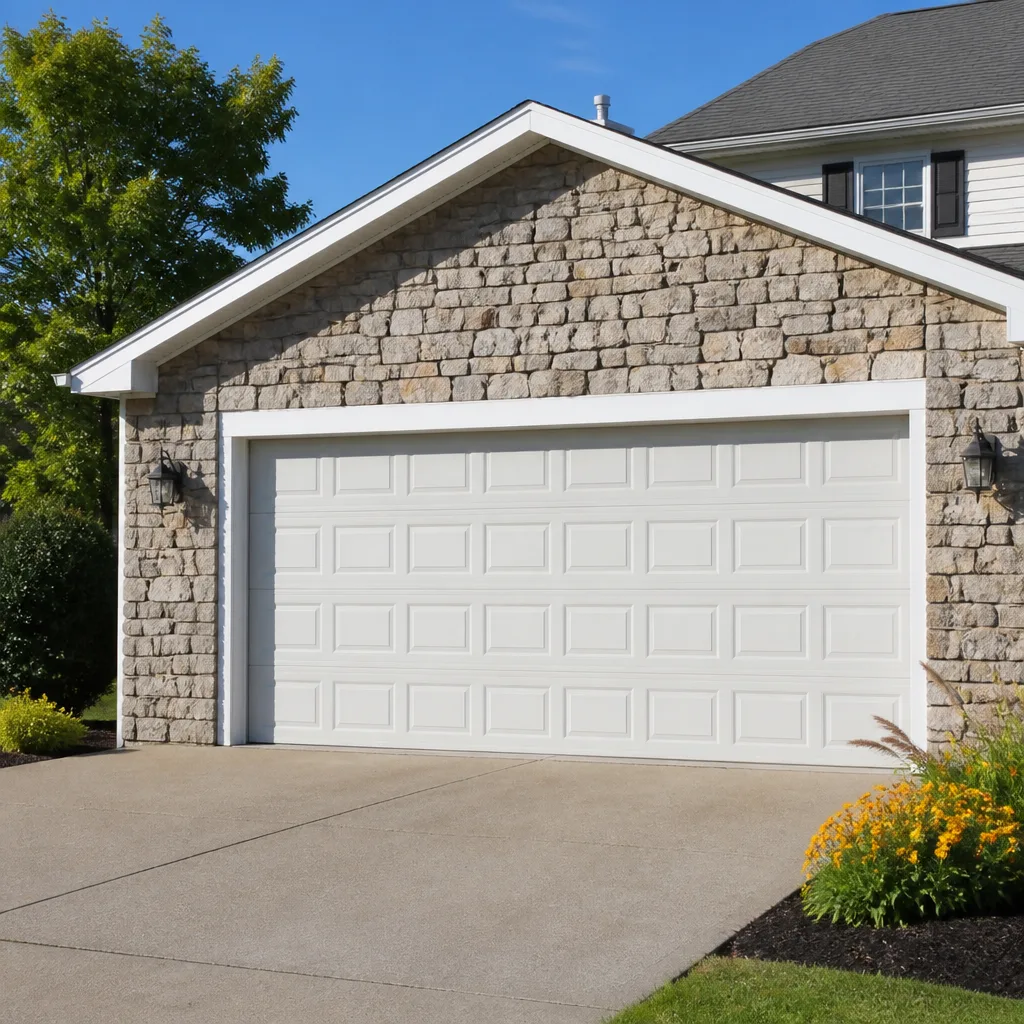 Raised-panel steel
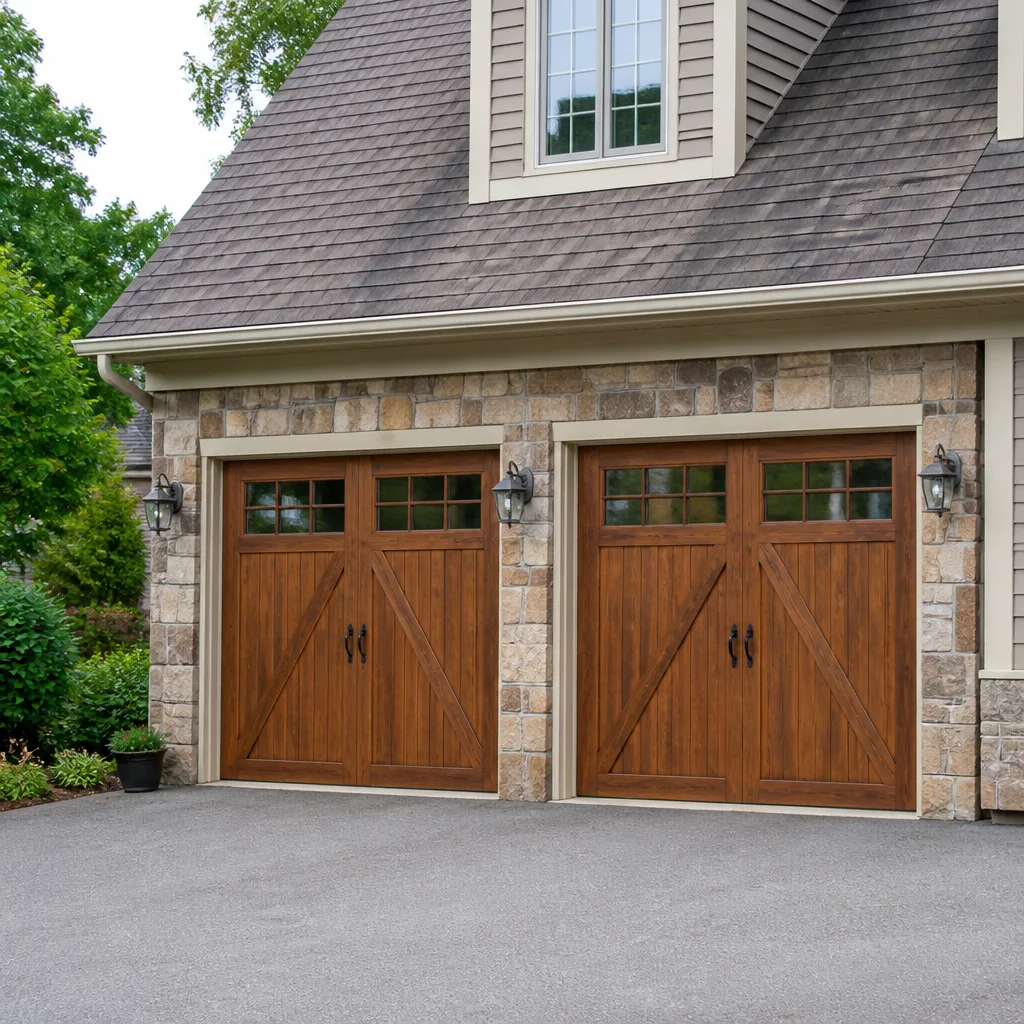 Carriage house
 Modern flush
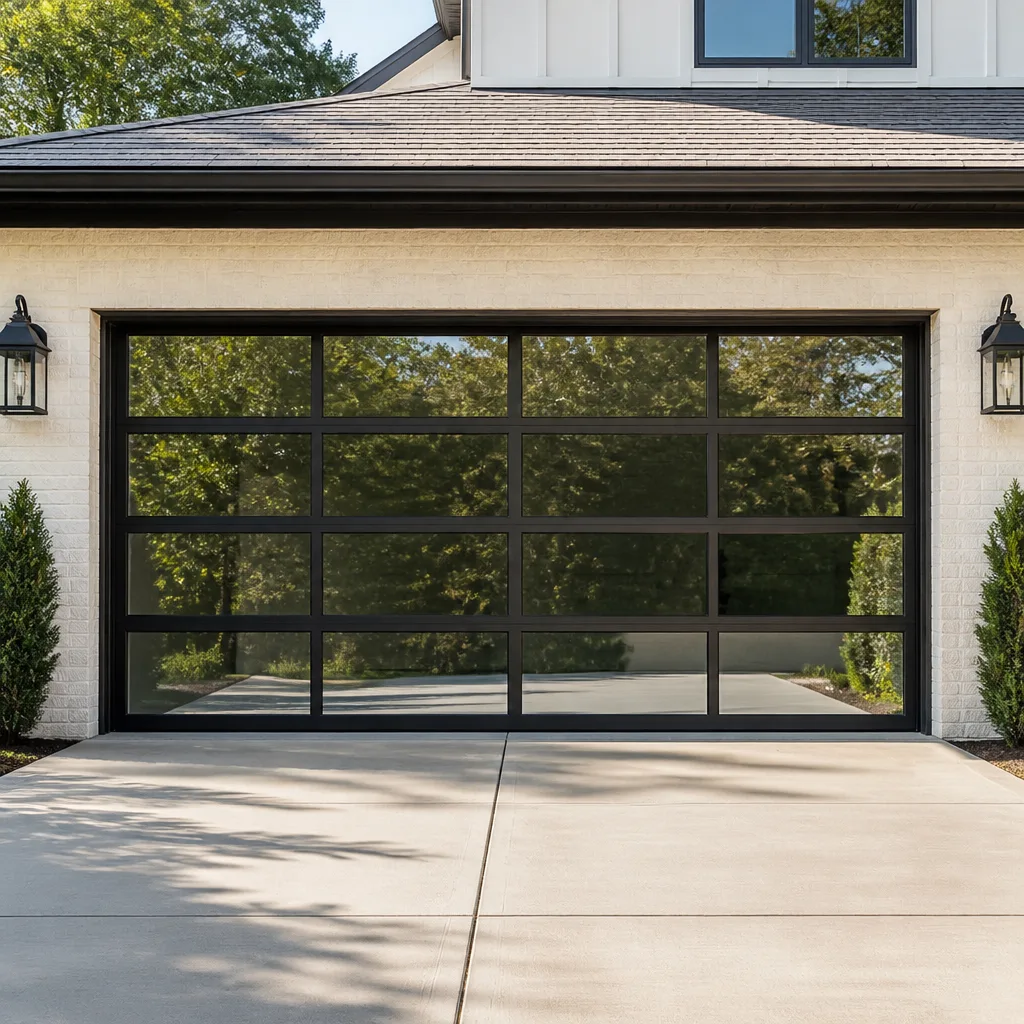 Full-view glass
 LiftMaster openers
 Chamberlain openers
Full 25-point door and opener safety check with every visit - springs, cables, rollers, tracks, and your LiftMaster or Chamberlain opener included
You get a price before we start. It does not change when the truck arrives.
Get your free estimateGarage Door Permits, Codes & Inspections in CA: What You Need to Know
The phone call almost always starts the same way: “I was told I need a permit just to replace my garage door springs, but the installer said no.” In 24 years of replacing and repairing garage doors across Ventura, we’ve watched this confusion cost homeowners real money, at closing tables and at the building counter. Most of what you’ve been told is half right, which in code terms means it’s wrong. Here’s the sentence that resolves 90 percent of the confusion: a permit is not required when you swap a broken part for an identical one, and is required when you change the size, structure, or fundamental configuration of the opening. The rest of this guide tells you exactly how to tell which one you’re doing, what Ventura’s Community Development Department actually wants to see, and how to avoid leaving an unpermitted modification on your property that will surface the day you sell.
Styles & brands we work with
Quick Answer
A standard garage door repair in California, such as replacing a torsion spring, cables, rollers, or an opener, does not require a permit under California Building Code. A garage door replacement does require a permit if you are changing the opening size, altering structural framing, or installing a door on a garage that was built before 1994 and lacks seismic bracing. When in doubt, the rule is simple: repair does not need a permit; alteration does.
Table of Contents
- The California Building Code Threshold: Where the Permit Line Actually Sits
- Ventura City Permits: How to Check and What the Process Looks Like in Practice
- The Seismic Bracing Requirement That Trips Up Pre-1994 Garages
- HOA Rules: The Parallel Code Layer That Can Veto Your Door Before the City Ever Sees It
- What Happens When Work Gets Done Without a Permit
- Door or Opener? Why Swapping a LiftMaster Gets Treated Differently Than Replacing a Clopay
- What Inspectors Actually Look At During a Garage Door Inspection
- Ventura Garage Door Permit Cost Breakdown
- Common Mistakes to Avoid
- When to Call a Professional
- Frequently Asked Questions
- The Bottom Line
The California Building Code Threshold: Where the Permit Line Actually Sits
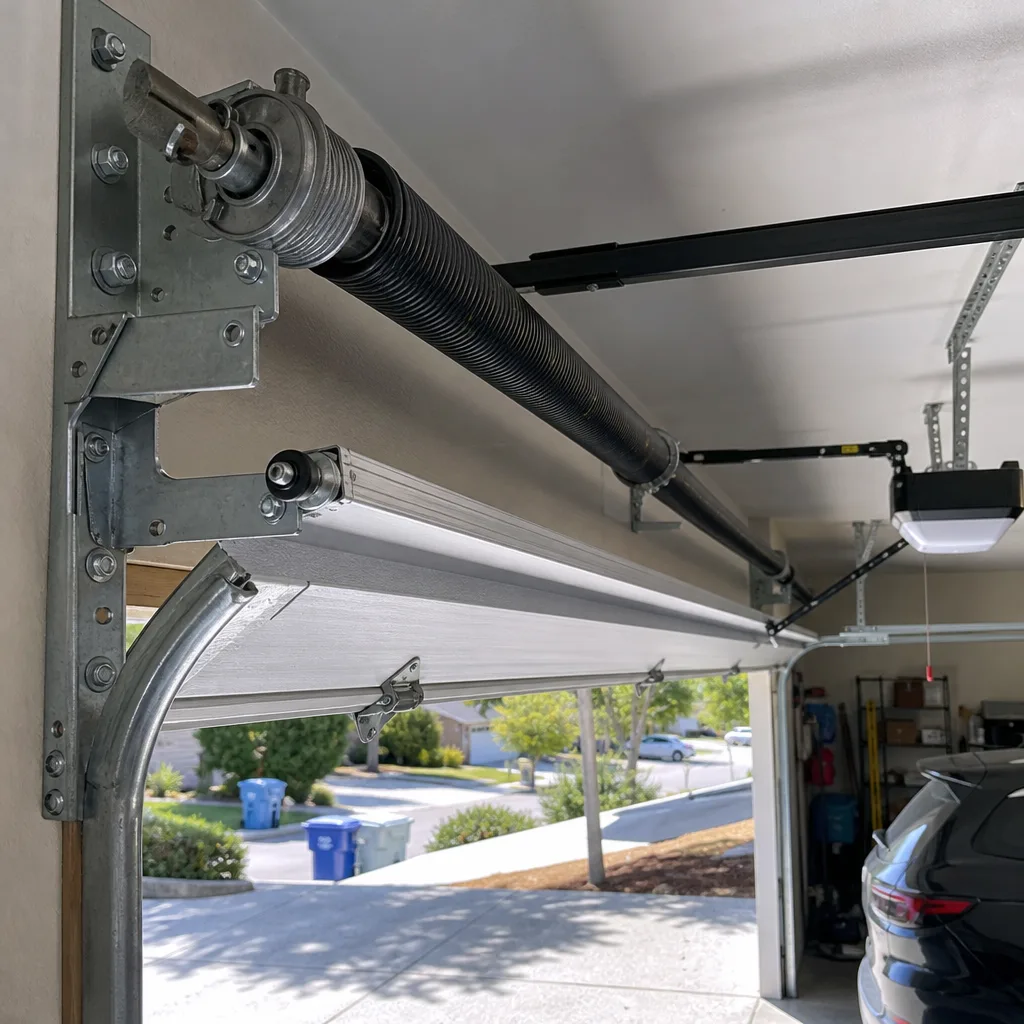
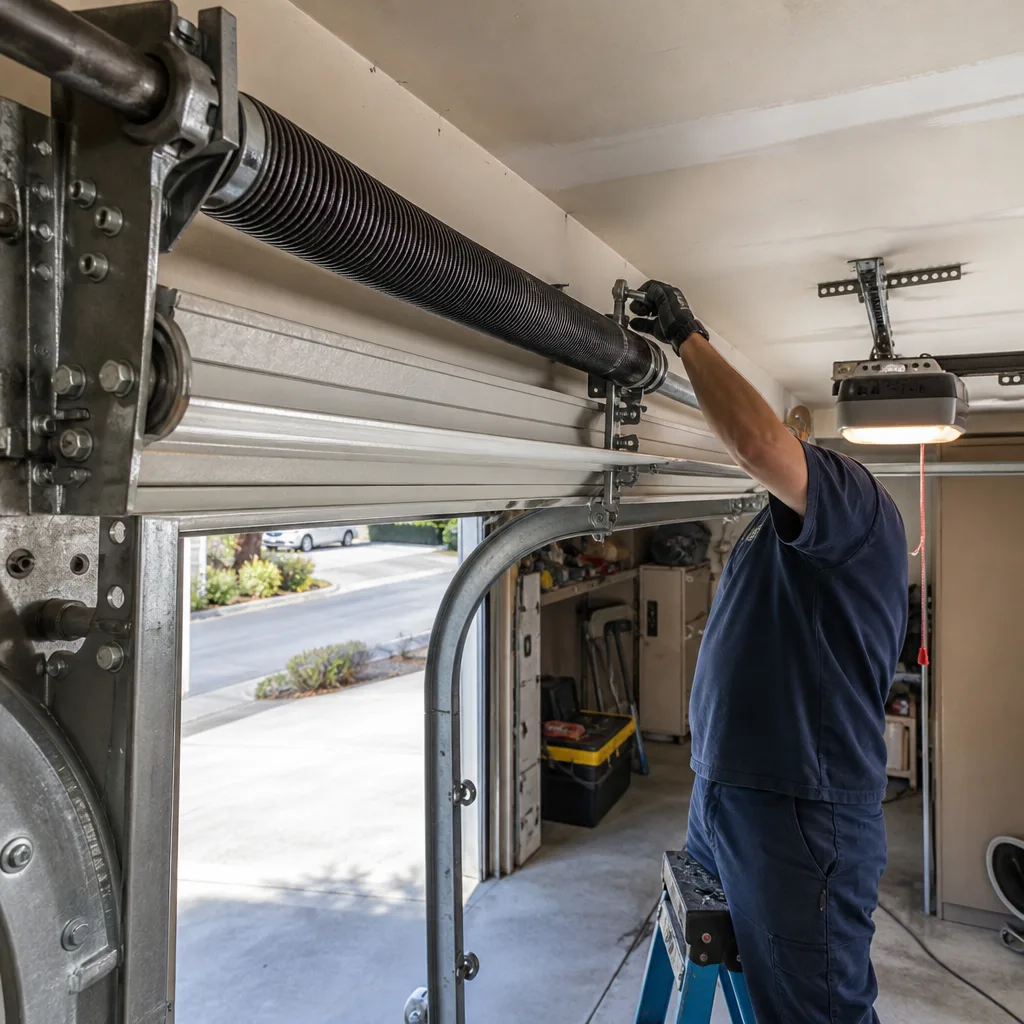
California Building Code Section 105.2 lists the work types that are exempt from permit requirements. The word that carries the load is “repair.” The code defines an exempt repair as the replacement or renewal of an existing part in a building for the purpose of its normal maintenance, where no change is made to the structure, the size, the electrical wiring, or the ventilation. That means a broken torsion spring in your Ventura garage, the large coil mounted above the door that does most of the lifting, can come out and a new one can go in with no paperwork from the City. The same applies to a snapped cable, a bent roller, a failed sensor, or an opener that has given up. If the work restores what was already there, you do not pull a permit.
The line gets crossed the moment the word changes from repair to alteration. CBC Section 105.1 says a permit is required for any construction that changes the structural system, increases the size, or modifies the means of egress. In plain terms:
- Widening the garage door opening from a single 8-foot to a double 16-foot door? Permit required. You are cutting into a load-bearing wall and changing the header.
- Replacing an old wood door with a new steel one of the same size? In most cases, no permit, because the structural opening is unchanged. But Ventura’s Planning Division may still want to review the new design for neighborhood compatibility if you’re in a designated historic district.
- Swapping a swing-out carriage door for a roll-up sectional in the same rough opening? This one is a maybe, and it leans toward permit required because you are changing the structural header load from side-hinged to top-supported. One call to the Community Development Department will settle it.
The distinction matters because California treats unpermitted structural work as a title defect in practical terms. When you sell a Ventura home, the buyer’s inspection report asks directly whether any work was done without permits. A widened opening done in 2019 with no paper trail becomes a negotiation point in 2026, and it almost never goes in the seller’s favor. We’ve walked into more than one Ventura garage where an old permit-exempt spring repair sat next to a clearly unpermitted opening enlargement, and the homeowner did not know the difference. After this guide, you will. If you’re unsure what to watch for, our Garage Door Warning Signs: A Ventura Homeowner’s Reference Guide covers the key red flags.
Ventura City Permits: How to Check and What the Process Looks Like in Practice
Ventura runs its building permitting through the Community Development Department, and the fastest way to check your specific situation is to call the Building and Safety Division directly during business hours. Do not rely on what a neighbor, a handyman, or a well-meaning online forum tells you, because Ventura has its own municipal amendments to the California Building Code, and some of those amendments are stricter than the state baseline.
For a typical garage door replacement where the opening is unchanged and the garage is post-1994, here is the path in practice:
- Call or visit the Building and Safety Division counter. Describe the work: replacement door, same opening, same electrical wiring. Ask if a permit is required for your specific address. In many cases, the answer is no, and the person on the other end will tell you that in under five minutes. In some cases, especially for designated historic districts, the answer is yes and you’ll need a simple over-the-counter permit.
- If a permit is required, prepare a site plan or rough sketch. You do not need an architect for a door swap. A drawing that shows the garage, the door location, and the dimensions of the existing opening is typically enough for a residential project of this scale.
- Submit the permit application and pay the fee. A garage door replacement permit in Ventura typically runs between $80 and $200, depending on the valuation of the door and whether a structural review is triggered. We’ll break the dollars down further below.
- Schedule the inspection. For a structural alteration, the inspector typically wants to see the new header, the bracing, and the final installed door. For a simple like-for-like swap that some other city required a permit for, the final inspection is often visual only and takes less than twenty minutes.
One mistake we see repeatedly in Ventura is relying on the contractor to tell you whether a permit is needed. A contractor who tells you a permit is not required when the Building and Safety Division says it is has just made you responsible for the violation. The permit runs with the property, not with the contractor’s memory. The person signing the application, and the person whose name is on the title when the violation is discovered, is you. Our recommendation is to get the answer from the City yourself, in writing if possible, and then hold the contractor’s permit to that standard. For help choosing the right professional, read How to Hire a Garage Door Contractor in Ventura: A Step-by-Step Guide.
The Seismic Bracing Requirement That Trips Up Pre-1994 Garages
Here is the one that surprises Ventura homeowners more than any other: if your garage was built before 1994, your garage likely has no engineered seismic bracing, and the California Building Code has something to say about that the moment you put in a new door. The state has required lateral bracing systems for garage door panels since the 1994 Northridge earthquake moved through Southern California and revealed what happens when an unreinforced garage wall takes the sideways punch of a 6.7 magnitude quake. The wall racks, the door pushes out, and the corner of the house loses its support.
What this means in practical terms: replacing a door on a pre-1994 Ventura garage, even a like-for-like door, can trigger the requirement to add panel bracing to the new door. Bracing is a steel U-channel or perforated angle system that runs vertically or diagonally across each door panel, tied into the frame. It stiffens the door so that the entire wall assembly resists lateral force as one unit instead of flopping independently when the ground moves sideways. A braced garage door acts as a shear panel; an unbraced one acts as a wide hole in the structure.
The cost for the bracing itself usually lands between $150 and $300 for a single-car door and between $250 and $500 for a double, depending on the panel count and the hardware. The bigger line item is the inspection: because the bracing modifies the structural performance of the opening, the City of Ventura treats it as an alteration, meaning the permit path above applies. We tell our Ventura customers to treat pre-1994 garages as permit-required by default until the Building and Safety Division says otherwise. It costs one phone call to be sure, and it costs a lot more to retrofit an unbraced door after the fact, which is exactly what happens when an inspector flags it during a resale inspection.
HOA Rules: The Parallel Code Layer That Can Veto Your Door Before the City Ever Sees It
If you live in a Ventura community governed by a homeowners association, and a large share of the newer developments on the east end and in the hills are, the city permit conversation is only half your homework. HOAs in Ventura commonly restrict garage door materials, colors, panel profiles, and even hardware placement, and many of those restrictions are strict written deed restrictions, not suggestions. The newest tract developments in the Wells Road corridor and the hillside communities above Foothill often require door styles that match the original builder’s spec: a Raynor or Clopay carriage-house profile in a specific earth tone, with no window lites and no visible exterior handle.
The problem is that an HOA violation and a building code violation are handled by entirely different systems, and neither one talks to the other. You can have a garage door that passes City inspection with flying colors and still receive a three-page violation letter from the HOA’s management company the following month. Conversely, an HOA might approve a door style that the City’s Planning Division, in a designated historic district, would never accept. Checking one does not check the other.
The sequence we recommend for any Ventura homeowner in an HOA-bound property:
- Pull your CC&Rs (covenants, conditions, and restrictions), not the summary the real estate agent handed you at closing. The full document is usually available through your HOA’s management portal or onsite office.
- Search the document for “garage door,” “architectural control,” and “exterior modification.” The restriction is often buried in a section titled something like “Architectural Guidelines” or “Design Review Standards.”
- Submit an architectural review application to the HOA’s design committee before you order a door. Most committees respond within 30 days, and a non-response is not the same as an approval in most governing documents.
- Then, and only then, check the City of Ventura’s permit requirement for the structural half of the job.
This is the kind of thing that feels bureaucratic until the day you are standing in your driveway with a $4,000 Raynor door that the HOA has rejected and the distributor will not take back. In our experience, the HOA conversation is the one Ventura homeowners skip most often, and it is the easiest one to get right if you check before you buy.
What Happens When Work Gets Done Without a Permit
The consequences of unpermitted garage door work are not theoretical in Ventura. They show up in three specific places, and every one of them costs more than the permit would have. First, at resale. When a buyer’s home inspector in Ventura sees a widened opening, a new header, or a door that clearly does not match the original framing, the standard question is: Was this permitted? If the answer is no, the seller either pays to have the work retroactively permitted before close, reduces the sale price to cover the buyer’s future cost, or loses the buyer entirely. In a market where Ventura homes routinely sell above list, a permit issue can still knock $5,000 to $15,000 off the final number, because the buyer’s lender may refuse to fund the loan on an unpermitted structural modification.
Second, at the insurance claim. If a garage door that was structurally altered without a permit fails during a wind event or a seismic event, the insurance carrier has a documented basis to deny the structural portion of the claim. California insurers now ask about unpermitted work on applications and renewal questionnaires. A garage door alteration that was never inspected is a known risk factor that carriers price for, or exclude, and they are within their rights to write the exclusion.
Third, the lien risk. If work is done without a permit and the homeowner later refuses to pay a contractor’s final invoice for whatever reason, the contractor may file a mechanics lien, and the homeowner has no clean paper trail showing the work was done to code. Without a permit and its associated inspection, the legal position of the owner is much weaker, and the dispute resolution process is much more expensive.
For reference, the retroactive permit path in Ventura, where it is even available, costs significantly more than the original permit would have, because the city may require you to open the wall and expose the header for inspection. That means drywall repair, stucco repair, paint, and the inspection itself. A $120 permit becomes a $1,200 to $2,500 project, and that assumes the inspector accepts what is found behind the wall.
Door or Opener? Why Swapping a LiftMaster Gets Treated Differently Than Replacing a Clopay
In the same conversation where a homeowner asks about a permit for a spring replacement, the next question is usually about the opener. Here is the distinction that surprises people: a garage door opener is an electrical appliance, and in almost every case in Ventura, replacing a failed LiftMaster, Chamberlain, or Genie opener with a new one of the same type and voltage is permit-exempt. The California Electrical Code and the California Building Code both treat like-for-like electrical appliance replacement as maintenance, not as alteration, as long as you are not running new circuits, adding significant new load, or relocating the unit.
That changes if you are adding an opener where none existed before. Running a new circuit from the panel to the garage for a new opener is electrical work, and Ventura will want a permit and an inspection. The same goes for adding a new outlet for a side-mount opener, or increasing the circuit ampacity to support a heavier unit. If the new installation requires any new wire in the wall, treat it as permit-required until the City says otherwise.
The garage door itself, on the other hand, is governed by the structural rules we covered above. A new Clopay steel door that slides into the same opening as the old wood door is likely permit-free. A new Raynor door that goes into a newly enlarged opening is not. The cleanest way to remember it: electrical appliance replacement is usually free of permits; structural opening changes almost never are. And a garage door opener repair in Ventura, whether it is a failed logic board, a stripped gear, or a trolley carriage that has jumped its track, falls squarely in the repair bucket. You are restoring an existing appliance to function, not altering the building.
What Inspectors Actually Look At During a Garage Door Inspection
If your garage door project does require a permit in Ventura, the inspection is not the scary part. The inspector is looking for a specific list of things, and knowing that list beforehand keeps the visit short and the outcome clean. Here is what a Ventura building inspector typically checks on a permitted garage door alteration or pre-1994 door replacement:
- Header and structural support: the beam above the opening must be properly sized for the new span, if the opening was altered. For a like-for-like replacement, the inspector confirms the existing header is intact and load-rated for the opening.
- Seismic bracing, if applicable: on pre-1994 garages, the inspector verifies that the new door panels carry the required bracing and that the hardware ties into the frame correctly. This is the item that fails most often, usually because the bracing was sold as an optional add-on and someone left it off the order.
- Electrical connections: if a new opener circuit or outlet was part of the permit, the inspector confirms the wiring is in conduit or properly rated cable, the outlet is GFCI-protected where required, and the opener is plug-connected or hardwired per the code.
- Door operation and safety features: the inspector will cycle the door and check the auto-reverse function, the photo-eye sensors, and the manual release. California has adopted the federal UL 325 standard, which requires the auto-reverse and photo-eye safety loop to be operational on any newly installed opener.
- Weather sealing and drainage, where the garage is attached: for an attached garage in Ventura, the door and threshold must maintain a proper air seal against vehicle emissions, per the California Energy Code, which is one of the most overlooked items in the whole inspection.
None of these items are difficult to pass when the installer knows what they are doing. What fails inspections, in our experience, is the combination of a small unpermitted shortcut that got caught. An opener added with new wiring and no permit, a braced door on a pre-1994 garage that skipped the bracing, or a widened opening that never had a structural engineer’s signature. The inspector’s job is to confirm the work matches what was filed, and any divergence from the filed plan is a correction notice.
Ventura Garage Door Permit Cost Breakdown
When a Ventura homeowner asks what this all costs, we give them a real number, not a shrug. Here is what we tell our customers the permit and code-compliance path actually looks like, in dollars, based on current Ventura fee schedules and our own jobs in the field:
| Item | Typical Cost in Ventura | Notes |
|---|---|---|
| Building permit for like-for-like door replacement (if city requires) | $80 – $150 | Usually waived; often no permit needed at all |
| Building permit for opening alteration (widening or resizing) | $180 – $450 | Depends on valuation and whether structural review is required |
| Electrical permit for new opener circuit | $60 – $120 | Required if running new wire or adding a circuit |
| Seismic bracing materials (pre-1994 door armor) | $150 – $500 | Varies by door size and panel count |
| Inspection fee (single trip) | Often included in permit fee | Re-inspection after a fail carries a separate fee |
| HOA architectural review application | $0 – $150 | Some Ventura HOAs charge; many do not |
| Retroactive permit for unpermitted work (if available) | $1,200 – $2,500 | Includes wall opening, inspection, and repair |
These are ranges, not quotes, and they shift with the City’s current fee schedule. The point of putting them on the page is simple: an informed Ventura homeowner walks into the permit counter knowing what the conversation is going to cost before they have it. The cheapest permit in this table is the one applied for before the work starts, and the most expensive line item is the retroactive row, because it exists to make you wish you had done it right the first time.
Common Mistakes to Avoid
- Assuming every garage door project needs a permit. A torsion spring replacement, a cable repair, or a roller swap is repair work, restore-and-maintain, and no Ventura permit is required. Over-permitting wastes time and money.
- Assuming no garage door project ever needs a permit. Widening the opening, changing the structural framing, or making a pre-1994 garage door unbraced triggers the permit requirement, and skipping it leaves a title defect that surfaces at resale.
- Trusting a contractor’s “we’ll handle it” without verifying with the City. The permit liability falls on the homeowner, not the contractor. One call to the Ventura Community Development Department settles it in five minutes.
- Skipping the HOA architectural review. A Ventura HOA can reject a new Raynor or Clopay door after it is installed, and HOAs have their own enforcement mechanisms that do not care what the City approved.
- Replacing a pre-1994 door without checking the seismic bracing requirement. This is the most common code miss in older Ventura garages, and it gets flagged at resale or during a post-quake inspection.
- Retrofitting after the fact instead of permitting before the work. The retroactive permit path costs five to ten times the original permit and may require opening up the wall.
- Assuming a door opener replacement is the same as a door replacement for permit purposes. A like-for-like opener swap is usually permit-exempt; a new circuit or relocation is not.
When to Call a Professional
Not all of this guide translates into a do-it-yourself afternoon, and in several cases the right move is to bring in an installer who knows the Ventura code path cold. Call a pro if your door opening is being widened or structurally altered: a header sizing error is a structural failure waiting for the next seismic event, and it is one of the few garage door errors that can put a family at risk. Call a pro if your garage predates 1994 and you are uncertain whether it carries panel bracing: the braking system itself involves high-tension components, and the door hardware must be installed to UL and CBC standards. Call a pro if you are replacing an attached-garage door and the existing seal is poorly maintained: the California Energy Code requirement on the air seal between garage and living space is not optional, and a ventilator-rated gap can red-tag your inspection. Doyle Garage Doors Ventura offers free estimates in Ventura and can check your permit situation before you spend a dollar at the counter. Call (559) 239-8293 and a real person will answer, day or night.
Frequently Asked Questions
No. Replacing a torsion spring, extension spring, cable, roller, hinge, or track is classified as normal maintenance and repair, which is explicitly permit-exempt under California Building Code Section 105.2. The spring itself does the lifting, and swapping a broken one does not alter the structure. Find a garage door repair in Ventura and get the work done with a written price in hand.
If the replacement door fits into the same opening size and the garage was built after 1994, in most cases no permit is required. If the garage predates 1994 or the opening size is changing, a permit is likely, and the Ventura Community Development Department can confirm for your specific address. When we do a new garage door installation in Ventura, we check the permit status before any work starts, so you are never surprised at closing or at the counter.
Garages built before 1994 may lack lateral bracing, and a door replacement on one of those structures may require you to add steel panel bracing so the door wall resists earthquake forces as a unit. The bracing materials cost $150 to $500, and the modification generally triggers a permit. It is not a decorative option; it is the structural reason the door wall stays upright when the ground moves.
If you are removing an existing opener and mounting a new one on the same bracket using the same electrical outlet, no permit is required, and the work is well within the range of a careful DIY project. The moment you run new wire, add an outlet, or move the opener to a different location, you are in permit territory. A garage door opener repair in Ventura technician can confirm whether your swap is exempt before you open the wall.
Yes. HOA architectural guidelines are a separate code layer, and they may restrict door materials, colors, panel design, and window lites. Approval from the City of Ventura has no bearing on the HOA’s decision, and the HOA’s approval does not substitute for a California Building Code permit where one is required. Check both before you order.
A basic building permit for a garage door alteration in Ventura typically runs $180 to $450 depending on the project valuation. A simple like-for-like replacement that the City happens to require a permit for is usually $80 to $150. The costliest version of the permit is the retroactive one, which can run $1,200 to $2,500 and requires opening the wall. Call (559) 239-8293 for an exact quote on your specific garage before any work starts.
The Bottom Line
One word separates a permit-free afternoon from a title defect: alteration. A spring replacement, a cable, a roller, an opener swap on the same bracket, these are repairs, and they are legally yours to handle without a City of Ventura permit. A widened opening, a structurally changed header, a pre-1994 door that now needs seismic bracing, these are alterations, and the permit is required for a reason. Ventura homeowners who make this distinction early spend $150 at the counter instead of $2,500 on a retroactive fix, and they never sit in an escrow negotiation explaining that the garage door was changed in 2019 and no one filed paperwork. Check the building code, check your HOA, and when the work is done, have it done by someone who puts the code compliance in writing. That is the whole practice, and it is a lot easier than the alternative. For more guides & resources, visit our blog.
Written by Aaron Teague, Owner at Doyle Garage Doors Ventura, serving Ventura since 2001.
See the difference
 Before
 After
After Before
 After
After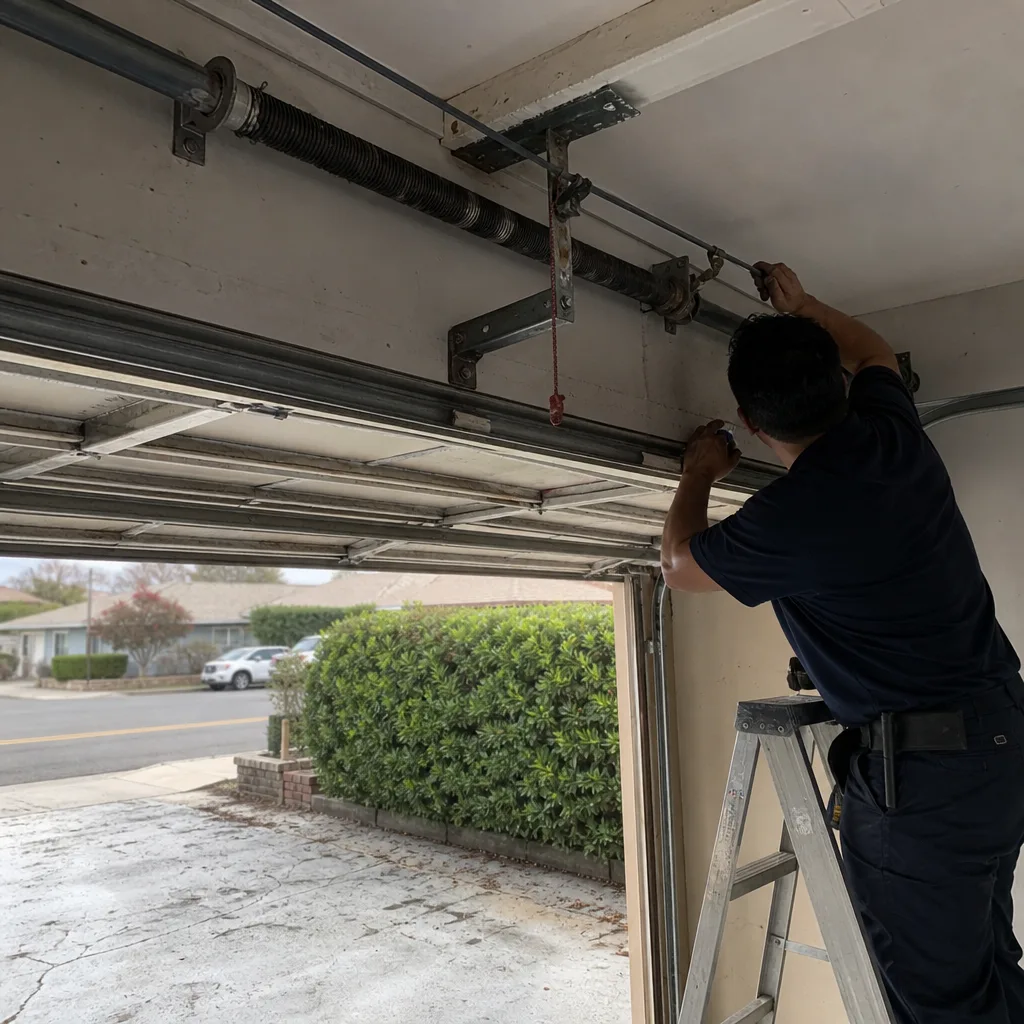 Before
 After
After