
Last updated October 16, 2026
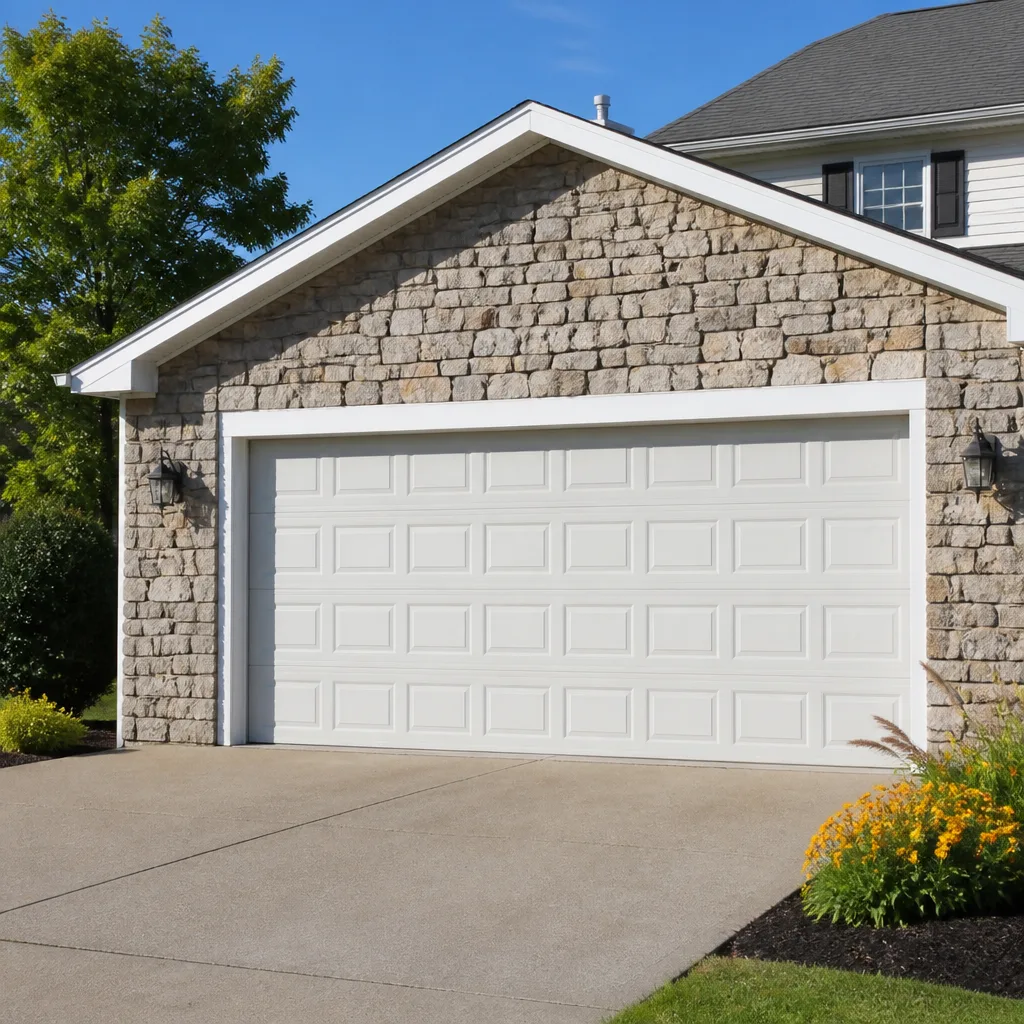 Raised-panel steel
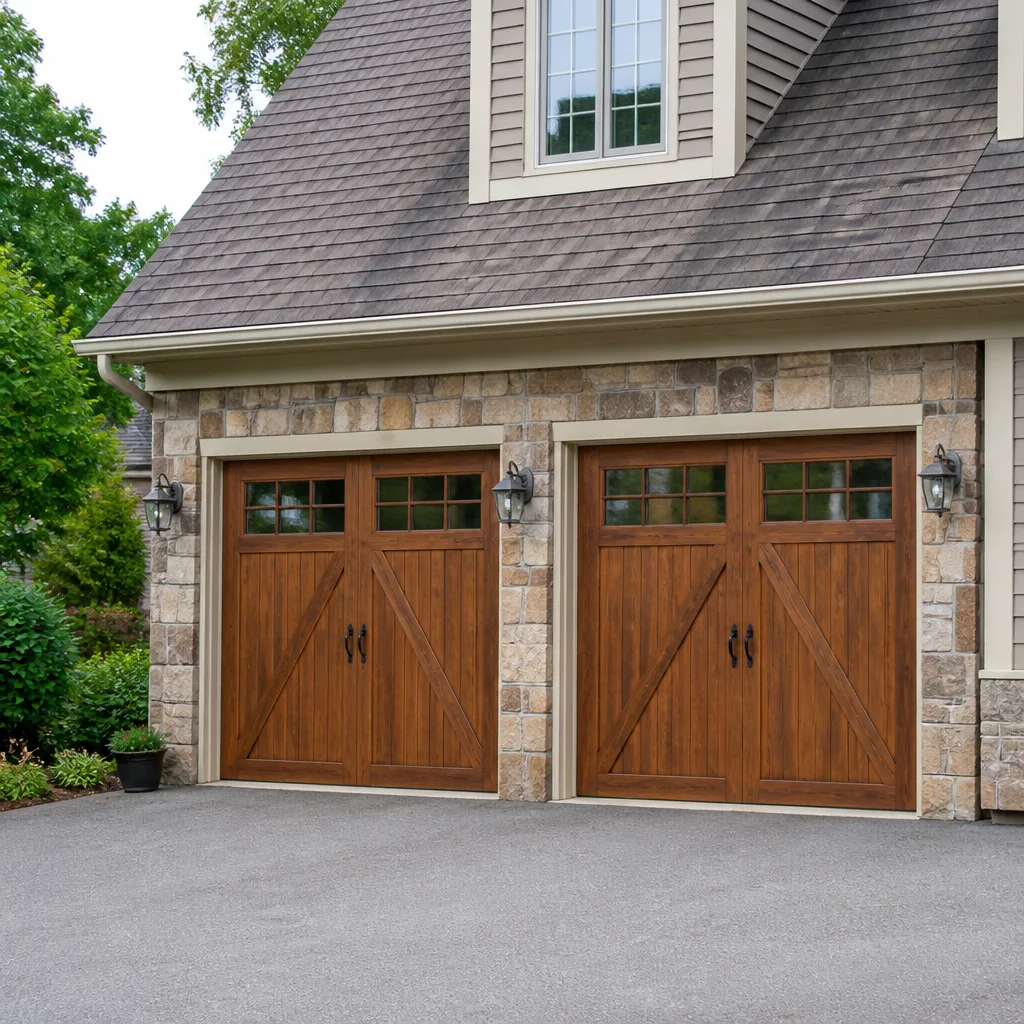 Carriage house
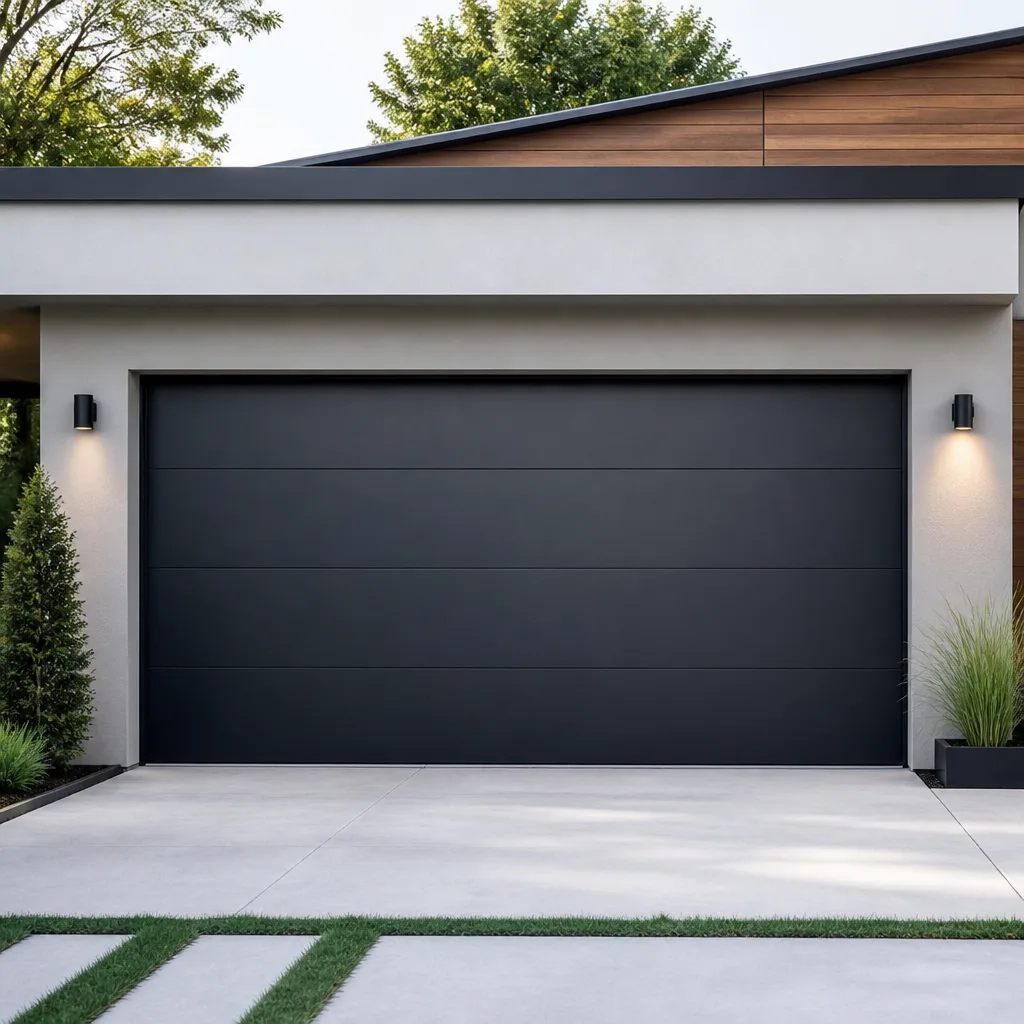 Modern flush
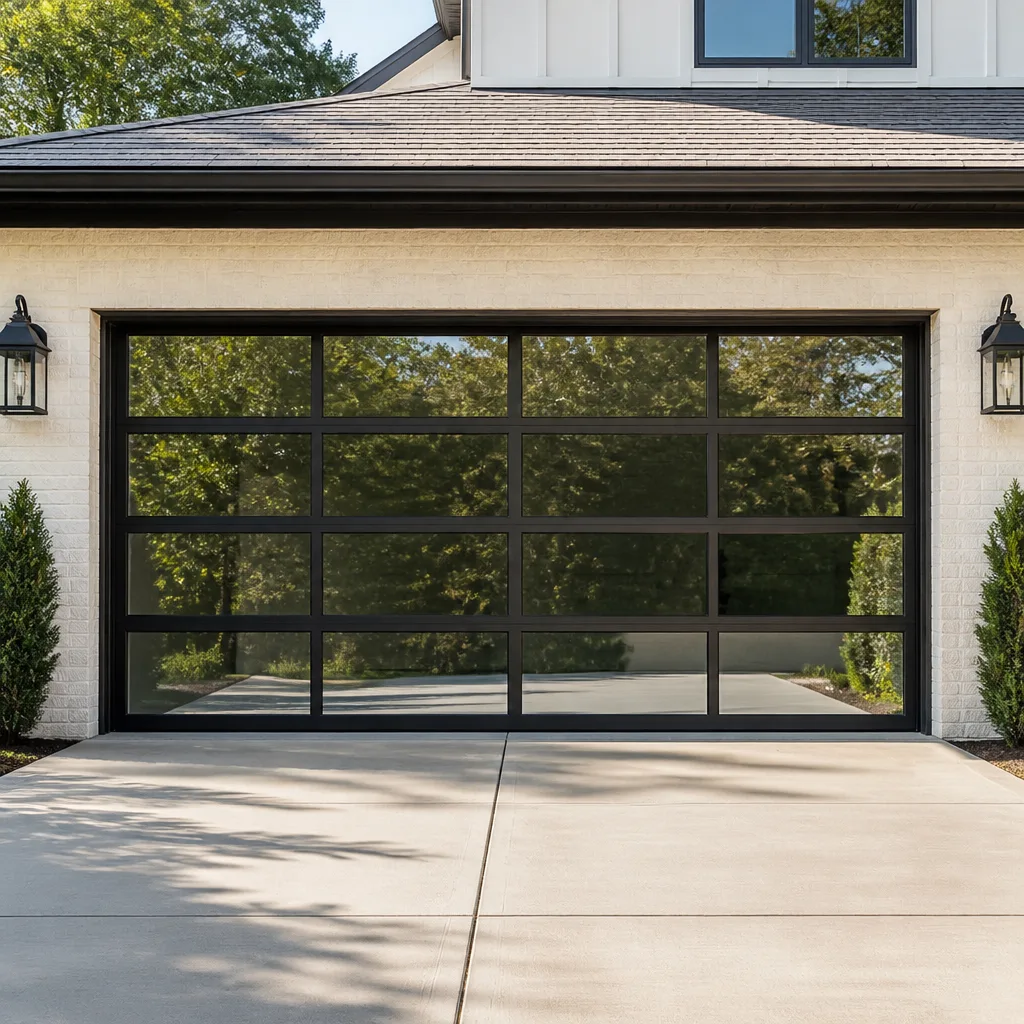 Full-view glass
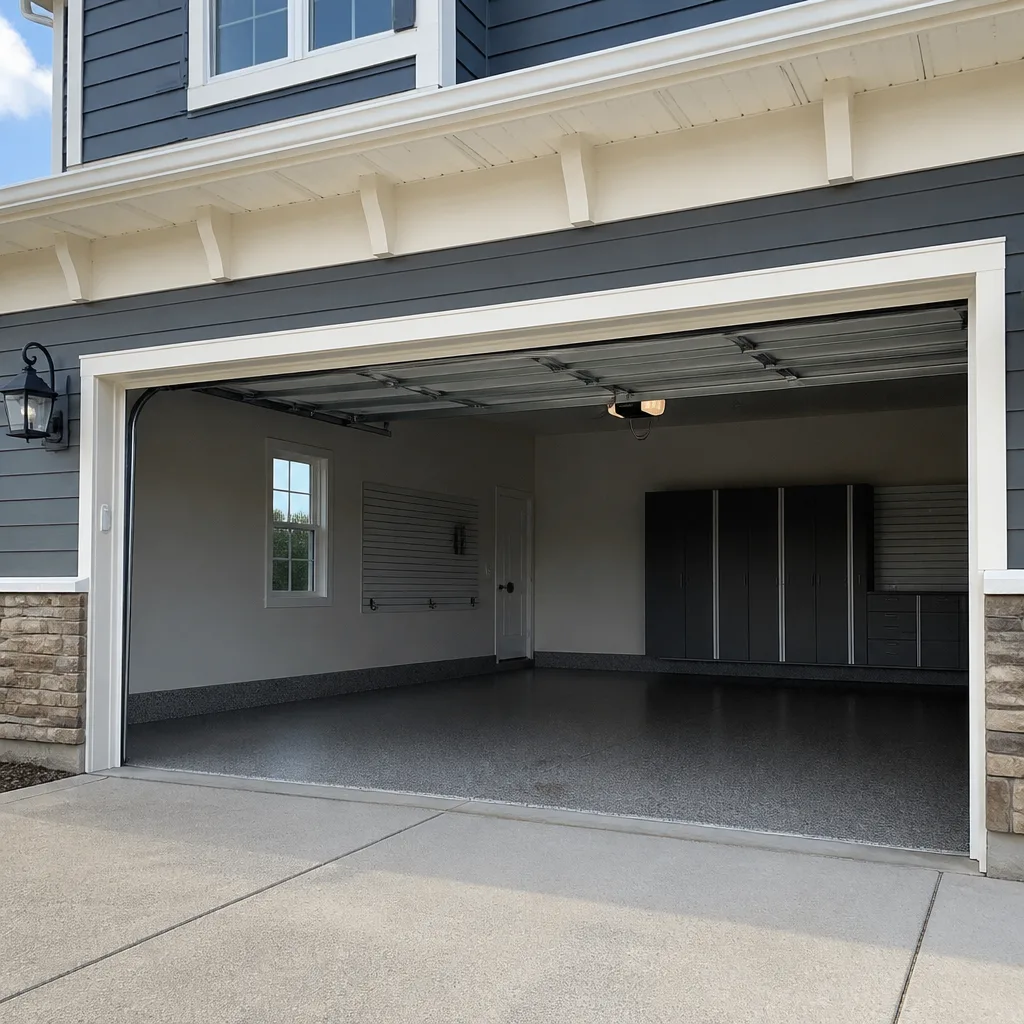 LiftMaster openers
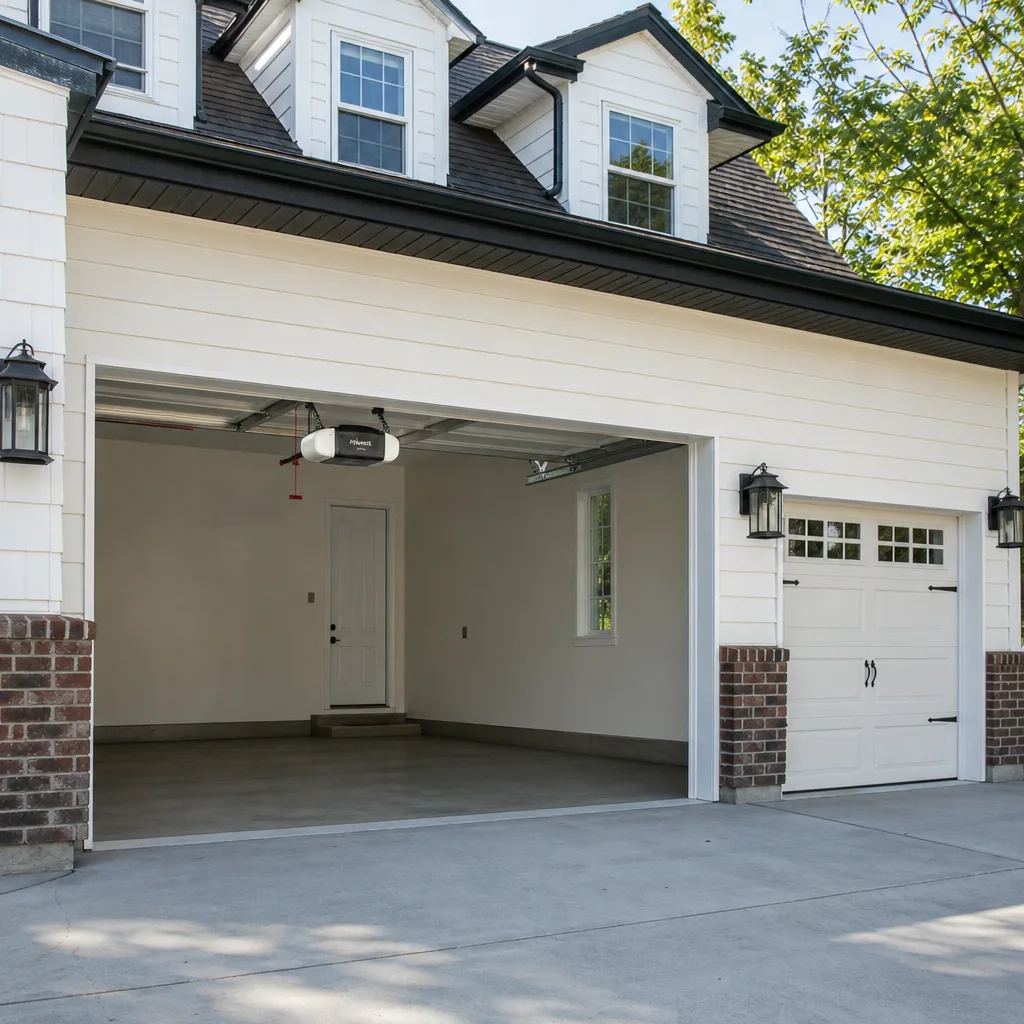 Chamberlain openers
Full 25-point door and opener safety check with every visit - springs, cables, rollers, tracks, and your LiftMaster or Chamberlain opener included
You get a price before we start. It does not change when the truck arrives.
Get your free estimateThe Complete Guide to Garage Door in Ventura
Your garage door is the single largest moving object in your home, and most Ventura homeowners cannot name one part of it. That’s not a criticism. It’s the reason a broken torsion spring, a $200 fix, gets misquoted as a full system replacement at $2,500. This guide names every component, explains what each one does, and tells you exactly when each part becomes your problem, so you can talk to any repair company in Ventura and know whether you’re getting straight answers. By the end, you’ll understand the eight interdependent parts that make up your system, how Ventura’s coastal air works against them, and which three failures actually justify full replacement.
Quick Answer
A garage door in Ventura is not one object but a system of eight interdependent components: the door panels, torsion or extension springs, cables, cable drums, tracks and rollers, hinges, the opener (motor, trolley carriage, limit switch), and the safety sensors. Garage door repair costs in Ventura typically range from $150 to $600 depending on the component, and most repairs are completed the same day. Knowing which part has failed, and how to read your door’s nameplate, is the difference between a $185 trolley carriage replacement and being quoted $1,800 for parts you never needed. For help deciding whether to tackle a fix yourself or call a pro, see our DIY vs Professional Garage Door: The Ventura Homeowner’s Decision Guide.
Styles & brands we work with
Table of Contents
- The Eight Components of Your Ventura Garage Door System
- How to Know Which Component Failed
- Why Ventura’s Coastal Air Eats Garage Doors Faster
- Sectional vs. One-Piece Tilt-Up: What Your Older Ventura Home Has
- How to Read Your Door’s Nameplate Like a Pro
- What Garage Door Repairs Actually Cost in Ventura
- Repair vs. Replace: A Decision Tree Based on Door Age
- Common Mistakes to Avoid
- When to Call a Professional
- Frequently Asked Questions
The Eight Components of Your Ventura Garage Door System
We’ve repaired garage doors in Ventura since 2001, and the misunderstanding that costs homeowners the most is treating the door as one unit. It’s not. It’s eight separate systems working together, and each one fails on its own timeline. Here’s what each part actually does, in plain English.
1. The Panels (Door Sections)
Most modern doors are sectional: four or five horizontal panels hinged together that roll up on a curved track. The panels themselves rarely fail outright. What fails is the weatherstripping between them, the paint or finish (especially in salt air), or the panel structure after an impact. A single damaged bottom panel on a 4-panel door often costs $350 to $600 to replace. If the door is over 15 years old, that single-panel cost becomes a better argument for full replacement.
2. Torsion Springs (The Muscle)
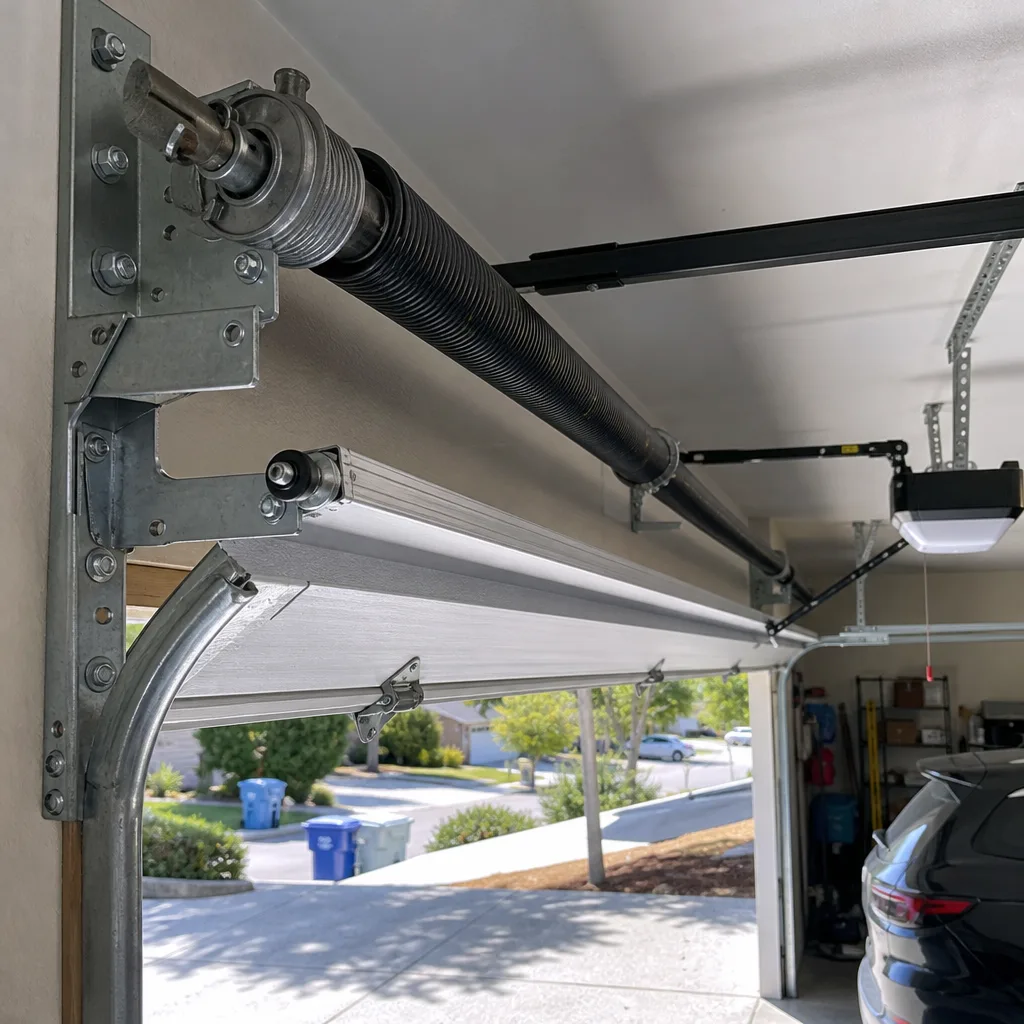
The torsion spring is the large coil mounted horizontally above the door opening. It stores mechanical tension that lifts the door’s weight, which on a standard two-car door in Ventura runs between 200 and 400 pounds. This spring does most of the lifting, not the opener motor. Torsion springs are rated by cycle life: a standard spring lasts about 10,000 open-close cycles, roughly 7 to 10 years in a home where the door cycles four times a day. When it snaps, it sounds like a gunshot in your garage. This is the most common repair we do, and in Ventura it typically runs $180 to $340 including the service call, part, and labor. We never recommend replacing just one spring, even if only one breaks; springs fatigue together, and the second one is usually weeks away from failing. That’s not an upsell. It’s math.
3. Extension Springs (The Alternative Muscle)
Older doors, and many one-piece tilt-up doors still common in older Ventura neighborhoods like midtown and College Area, use extension springs instead of torsion. These stretch along the horizontal tracks on each side of the door. They’re cheaper to replace ($140 to $250 in Ventura), but they have a known failure mode: when one snaps, it can send a sharp metal end flying. Modern code requires a safety cable threaded through the center of each extension spring to contain the break. If you have an older Ventura home and no safety cables, that’s a legitimate safety upgrade to request, not a scare tactic.
4. Cables and Cable Drums
Thin steel cables run from the bottom of each door side up to a drum that winds and unwinds as the door moves. The cable and drum work together to keep the door level and to transfer the spring’s tension. In Ventura’s salt air, galvanized cables corrode faster than they do inland, and the strands begin to fray. You’ll see wisps of steel hair near the bottom bracket or the drum. A frayed cable under load is dangerous; it can snap without warning and drop the door onto whatever’s beneath it. Cable replacement is not a DIY job on any door with torsion springs. The spring must be safely unwound first, and doing that incorrectly can send a winding bar into your face at high speed. Cable replacement in Ventura runs $150 to $225 per side, and replacing both sides at once is standard practice.
5. Tracks, Rollers, and Hinges (The Guidance System)
The vertical and horizontal tracks are the rails the door rides on. They wear, especially where the curve is tightest, and they can bend if the door takes a hit from a car bumper or a stray basketball in the driveway. Worn nylon rollers cause that rattling noise you hear when the door runs. Hinges connect the panels and fail most often at the bottom, where the weight concentrates. A full set of nylon rollers, hinges, and a track service in Ventura runs $120 to $220. This is the maintenance you defer, and the noise you eventually can’t ignore.
6. The Opener: Motor, Trolley Carriage, and Limit Switch
The opener is the box mounted to the ceiling with the long rail hanging from it. Inside, there are three parts worth knowing by name. The motor drives the chain or belt. The trolley carriage is the plastic-and-metal sled that travels along the rail and connects to the door arm. The limit switch tells the motor where “up” is and where “down” is. When a door stops two inches short of the ground, or reverses too soon, or the opener just hums without moving, the culprit is one of those three. A trolley carriage replacement runs $140 to $250 in Ventura. A limit switch adjustment is usually part of a $95 to $150 service call. If the motor itself has failed on an opener over 12 years old, replace the opener.
7. Safety Sensors (The Eyes)
Federal law since 1993 has required photo-eye safety sensors on every automatic garage door. They’re the two small units mounted about six inches off the floor on each side of the opening. They send an invisible beam across the threshold; if anything crosses it while the door is closing, the door reverses. When they get bumped out of alignment, or the sun hits them at a low angle in a west-facing Ventura garage, the door refuses to close. The fix is usually realignment, which is fast and cheap. But a sensor that interprets direct sunlight as an obstruction is a persistent afternoon problem in coastal Ventura neighborhoods where garages face the ocean glow, and occasionally the sensors need shielding.
8. The Door Arm and Emergency Release
The door arm connects the trolley carriage to the top panel. The emergency release is the red cord hanging from the opener rail. It disconnects the door from the motor so you can lift it manually. People pull this cord during a power outage and then cannot figure out why the opener now runs but the door does not move. Reconnecting it takes about thirty seconds, but if the door arm is bent or the travel is out of adjustment, the door can run crooked and bind against the track. This is one part on every list that almost never fails on its own; it fails because something else did.
How to Know Which Component Failed
The most useful question we ask on a phone call is: “What did it sound like, and what did the door do?” The answer narrows the diagnosis to one or two components before we even schedule. Here’s the diagnostic pattern, in order of how often we see it in Ventura garages.
Step 1: Listen and Look at the Door’s Position
- Loud bang, spring visible, door won’t open more than a few inches: torsion spring snapped. The door feels impossibly heavy because you’re now lifting all 300 pounds with the motor, which won’t do it.
- Door opens one side, cocks at an angle, stops: broken cable on the low side. Do not operate the door. The remaining cable is now under the full load of the door.
- Motor hums but nothing moves: trolley carriage stripped, or the emergency release is pulled and the arm is not engaged.
- Door runs but makes a rhythmic thump: worn roller, loose hinge, or a flat spot on a steel roller. Nylon rollers don’t flat-spot; steel ones do.
- Door starts closing, then reverses for no visible reason: misaligned safety sensor or direct low-angle sunlight on a sensor lens.
- Door stops short of the ground by an inch, then sometimes sinks after a beat: limit switch out of adjustment, or a failing spring that has lost tension.
Step 2: Do Not Try to Fix These Yourself
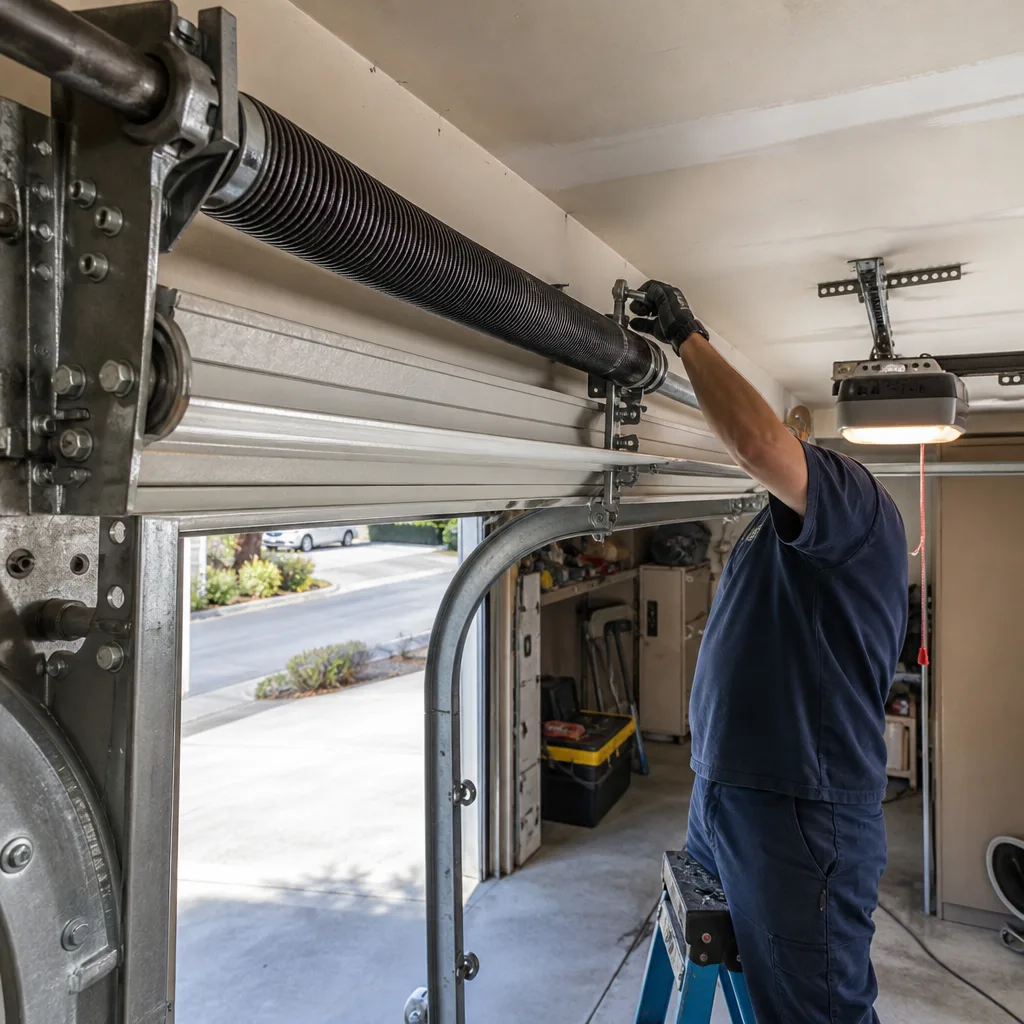
Two components require professional tools and technique, no exceptions: torsion springs and cables on torsion systems. The spring is under enough tension to break bone or worse if the winding bar slips. The cable wraps around a drum under the same tension. In our two decades of garage door work in Ventura, the injuries we’ve learned about secondhand are always from someone who watched a ten-minute video and tried it with a pair of vise grips. It’s the one place in your house where “I’ll figure it out” has life-altering stakes. Have a technician handle any spring- or cable-related repair. What you can reasonably do yourself: tighten a loose hinge screw, clean the sensor lenses, and replace a burned-out bulb in the opener.
Why Ventura’s Coastal Air Eats Garage Doors Faster
Ventura sits in a marine environment, and that’s wonderful for ocean views and not wonderful for steel under tension. The salt in the air accelerates corrosion on every metal component of a garage door system, but the effect is uneven. Here’s what we see in garage doors across Ventura that inland homeowners in places like Santa Paula or Ojai rarely deal with:
- Galvanized cables rust at the bracket first. The thin galvanized coating on standard door cable is rated for mild environments. In a Ventura garage within two miles of the coast, the cable corrodes at the point it passes through the bottom bracket, where salt spray and condensation collect. If you can see reddish-brown discoloration on the cable near the floor, that cable has lost tensile strength and is running on borrowed time.
- Extension springs shed their coating and then the wire itself pits. The oiled finish that protects a new extension spring lasts about two years near the ocean. After that, you get surface rust, then pitting, then a stress fracture at a pit. We replace the spring before it fails because the failure mode involves a sharp piece of metal traveling fast.
- Steel tracks rust at the floor plate. The vertical track sits in the corner where garage floor moisture, salt air, and brake dust all meet. The bolt holes at the bottom of the track are the first to rust through.
- Rollers seize and then wear flat. Steel rollers with unsealed bearings rust from the inside out in salt air. They stop rolling and start sliding, which wears a flat spot on the wheel and grooves the track. That’s the source of the “womp-womp-womp” sound a lot of coastal Ventura doors make.
What material specs to request on a coastal Ventura door: nylon rollers with sealed ball bearings (they never need oil and the bearing stays clean), powder-coated or stainless steel tracks (worth the upgrade within two miles of the ocean), and high-cycle torsion springs rated at 20,000 cycles or more. Most new homes get 10,000-cycle springs. Ask for the upgrade. The cost difference is about $40 to $60 in Ventura, and it means the difference between a spring that lasts seven years and one that lasts twelve or more.
Sectional vs. One-Piece Tilt-Up: What Your Older Ventura Home Has
Ventura homes built before roughly the late 1970s often have one-piece tilt-up doors. They’re the doors that swing outward from a single pivot before rolling back on horizontal tracks, or they lift straight up into the garage on one solid panel. Many are thick, heavy, and built like tank hatches. Midtown Ventura, the College Area, and older sections of East Ventura have these doors in surprising numbers. Understanding which type you have matters because the repair economics are completely different.
The Repair Cost Difference
A sectional door distributes its weight across multiple panels and hinges, so a damaged section can be replaced while the rest of the door stays in service. A tilt-up door is one panel. There is no section to replace. When a tilt-up door panel rusts through, warps, or takes a hit from a car, the repair is actually a door replacement. The hinges, the jamb hardware, and the spring system may also be proprietary to a door that hasn’t been manufactured in decades.
In Ventura, a full conversion from a one-piece tilt-up to a modern sectional door typically runs $1,400 to $2,800 depending on size, insulation, and hardware. That sounds steep until you compare it to chasing parts for a 50-year-old door on the phone with a salvage yard. The functional question is this: if the only moving part on your tilt-up door that has failed is the extension spring, repair it for $140 to $250 and you’re done. If the panel itself is damaged or rusted through, replacement is the honest answer, and nobody should quote you a “panel repair.”
What Age Tells You About Safety
Pre-1993 automatic openers, still present in some original Ventura garages, predate the federal photo-eye sensor mandate. If your opener has no sensors at the floor, or the sensors are there but disconnected, that’s a real hazard in a garage where children or pets are present. The fix is not a debate: install a sensor-compatible opener, or have sensors retrofitted. We’re happy to check the date and compliance status on any service call.
How to Read Your Door’s Nameplate Like a Pro
Every modern garage door has a nameplate or data sticker, usually on the end stile of the bottom panel or on the vertical edge of a side panel near the floor. It’s the garage door equivalent of the sticker inside your driver’s side door jamb. It tells you three things that make you an informed caller. Here’s how to read it, and here’s what you do with each piece of information.
Step 1: Find the Model and Serial Number
Write down the model number exactly as printed. Clopay, Amarr, Wayne Dalton, and every other manufacturer stamps or labels it. When you call us for garage door service in Ventura, that model number lets us identify the door’s exact configuration before we arrive: panel thickness, insulation type, spring system, and hardware spec. It also keeps the conversation honest. If a company tells you a part is discontinued, we can verify it against the model.
Step 2: Note the Weight Rating and Spring Information
The nameplate often lists door weight and the spring’s inside diameter, wire size, and length, which together determine the spring’s lifting capacity. Why this matters: if you’ve moved into a Ventura home and the previous owner or a handyman installed the wrong spring, the opener motor has been quietly overloaded the whole time. A spring that’s too weak makes the opener strain every cycle, burning out the motor years early. A spring that’s too strong slams the door up and makes it feel light, which is actually dangerous because a lightly loaded door can jump the track. The nameplate data tells us what’s supposed to be there.
Step 3: Check Opener Compatibility and Cycle Rating
Some nameplates note whether the door is rated for a belt-drive or chain-drive opener, and the cycle rating of the spring. If your spring is rated 10,000 cycles and the door cycles six times a day, that’s roughly 4.5 years of life. If the spring is seven years old and you’re hearing a groan, you already know the answer. None of this is exotic knowledge. It’s printed on your door. Most people have never looked at the label, and that’s the difference between being quoted a price you can verify and being quoted a price you just have to trust.
What Garage Door Repairs Actually Cost in Ventura
Here’s the truth that most homeowners want and most company websites won’t give: a real price range. These are the numbers we see, and quote, for the major repair types in Ventura as of the current season. Your exact price depends on your door’s weight, spring type, and the specific part, but this table gives you a floor to stand on before you call anyone.
| Repair Type | Ventura Price Range | Same-Day Availability |
|---|---|---|
| Broken torsion spring (replaced as a pair) | $180 – $340 | Yes |
| Broken extension spring (replaced as a pair) | $140 – $250 | Yes |
| Frayed cable replacement (both sides) | $150 – $225 | Yes |
| Trolley carriage replacement | $140 – $250 | Yes |
| Roller, hinge, and track service (full set) | $120 – $220 | Yes |
| Limit switch adjustment | $95 – $150 (service call) | Yes |
| Safety sensor realignment or replacement | $95 – $180 | Yes |
| New LiftMaster or Chamberlain opener, installed | $450 – $850 | Scheduled |
| Full door replacement (sectional, insulated) | $1,400 – $2,800 | Scheduled |
Note the distinction: repair work is same-day. New door installation and new opener installation are scheduled, because they involve measuring, ordering, and setting aside a longer service block. Also note what’s not on this table: a “free inspection” price that becomes a hard sell, or a phone quote that changes after the tech arrives. Every job at Doyle Garage Doors Ventura includes a written price handed to you before a single bolt is turned, and that price is the price.
The most common repair across all of Ventura, from the beachside homes in Pierpont to the hillside terraces above Foothill, is the broken torsion spring. It’s not glamorous. It’s the part that does the lifting, doing its job badly after years of cycles, then failing all at once. Replace it as a pair, verify the cycle rating, and you’ll forget it for the better part of a decade.
Repair vs. Replace: A Decision Tree Based on Door Age
No honest guide will tell you “always repair” or “always replace.” The answer depends on two numbers: the age of your door and the component that failed. Here’s the decision tree we use when a Ventura homeowner asks us whether to put money into a door or replace it.
Step 1: Check the Door’s Age
Look at the nameplate for a date, or estimate from the home’s construction. Then apply these thresholds:
- Door is under 8 years old: Repair. Almost always. The panels are still available, the hardware is standard, and the remaining service life justifies the cost. Even a $340 spring pair is a good investment on a young door.
- Door is 8 to 15 years old: This is the judgment zone. If the failed part is a spring, cable, roller, or hinge, repair it. These are wear items, just like brake pads on a car. If the failure is a cracked or rusted panel, get the replacement panel price and compare it to 40% of a new door. At that age, a panel replacement on a 15-year-old door is usually a bridge to nowhere.
- Door is over 15 years old: The same wear-item logic still applies to springs and cables, because replacing a 17-year-old door because of a broken spring is like replacing a car because of a brake job. But when multiple components have failed in the same year, or the panel is structural, or the door is a tilt-up with no parts availability, replacement is the honest call.
Step 2: Identify the Failed Component Class
Wear items (springs, cables, rollers, hinges, weatherstripping) are repair-friendly at almost any age. Structural items (panels, stiles, the main door frame) trend toward replacement as age climbs. Opener vs. door is a separate question: if your opener has died and the door is healthy, replace just the opener. If the door is end-of-life and the opener is also 20 years old, bundle them and save on the installation cost.
Step 3: The “Do Nothing” Option
Some failures are cosmetic. A scratch on a panel, a small dent from a bicycle, paint fade from the Ventura sun. If the door opens, closes, balances, and seals, doing nothing is a legitimate choice. Our job is not to convince you to spend money. Our job is to tell you what’s broken, what it costs to fix, and what actually happens if you don’t. In two decades, we’ve never met a customer who regretted knowing the truth about their door.
Common Mistakes to Avoid
- Replacing only one spring. Springs fatigue as a pair. You save $100 now and pay the full spring-replacement price again in six weeks. It’s the most common false economy we see in Ventura garages.
- Running the opener with a broken spring. The opener motor was never designed to lift a 300-pound door alone. Running it against a snapped spring burns out the motor, converting a $250 spring job into a $750 spring-plus-opener job.
- Spraying WD-40 on rollers and calling it maintenance. WD-40 is a water displacer, not a lubricant. It strips light grease, then evaporates. Rollers with sealed bearings need no lubrication at all. The moving parts that benefit from oil are springs and hinges, with a silicone-based or white lithium grease.
- Ignoring the slow-down signs. A door that was quiet and is now loud, or fast and now slow, or smooth and now jerky, is talking to you. Most failures in Ventura garages announce themselves weeks in advance. The rare exception is a cable snap, which is sudden.
- Trusting a phone quote. We give price ranges by phone and written exact prices at the door. A company that quotes you an exact number without seeing your door is guessing. A company that changes the price after arriving, on the other hand, is something worse. Get it in writing before work starts.
- Putting off a safety sensor replacement. “The door closes if I hold the button down” is not a fix. It’s an override. In a garage where a child or dog can enter, that override is a hospital visit waiting. Realign or replace the sensor.
When to Call a Professional
Call a professional the moment you hear a bang from the garage, see a frayed cable, or notice your door running crooked. Call when your opener runs but the door moves unevenly, or when the door refuses to close because the sensors are misaligned and you cannot find the culprit. Call when your tilt-up door from 1971 has a rusted-through panel and no parts exist. These are not DIY-optional situations, and the cost of a service call in Ventura is trivial compared to the cost of a door falling off its track or a spring releasing under tension. Doyle Garage Doors Ventura offers free estimates in Ventura. Call (559) 239-8293 and a real person answers, day or night, weekends and holidays included.
Frequently Asked Questions
Torsion spring replacement in Ventura typically runs $180 to $340 for a pair, including the springs, labor, and the service call. Extension spring replacement runs $140 to $250 for the pair. The exact price depends on your door’s weight and spring rating, which is printed on your nameplate. Call (559) 239-8293 for a written quote before any work begins.
In most cases, yes. Spring breaks, cable frays, roller failures, and limit switch issues are same-day repairs in Ventura. Full door or opener installations are scheduled because they require measuring and ordering specific equipment, but the initial measure and written price happen the same day you call.
Standard 10,000-cycle springs last roughly 7 to 10 years in a home where the door cycles four times a day. In coastal Ventura, salt air can shorten that slightly by accelerating surface corrosion. High-cycle springs rated at 20,000 cycles are a worthwhile upgrade near the coast and can last 12 to 15 years.
In Ventura garages, the three most common causes are misaligned safety sensors, a limit switch that needs adjustment, or direct low-angle sunlight hitting the sensor lens in a west-facing garage. The sensor and limit switch fixes are fast and inexpensive. If the door also feels heavy to lift by hand, a failing spring is the more likely culprit.
Repair the door if it’s under 15 years old and the failed component is a spring, cable, roller, or hinge. Consider replacement if the door is over 15 years old and the failure is structural, such as a rusted-through panel or a bent frame. For a one-piece tilt-up door with no parts available, replacement is almost always the honest answer.
Yes. Our Ventura service trucks carry the most common spring sizes, cables, rollers, hinges, sensors, trolley carriages, and limit switches. The written price you receive at the door includes the part in hand, not a promised part ordered for next week.
The Bottom Line
Your Ventura garage door is a system of eight components, each with its own lifespan and each talking to you before it fails. Knowing the names, the typical Ventura prices, and the difference between a sectional and a tilt-up door changes the entire conversation you have with a repair company. It means you’ll replace spring pairs instead of single springs, understand why your coastal air is corroding cables faster than your inland friend’s, and know when a repair is smart money and when a replacement is the only honest option. The door on your garage works hard, every day, in salt air and sun. Now you know how to talk about it.
Written by Aaron Teague, Owner at Doyle Garage Doors Ventura, serving Ventura since 2001.
See the difference
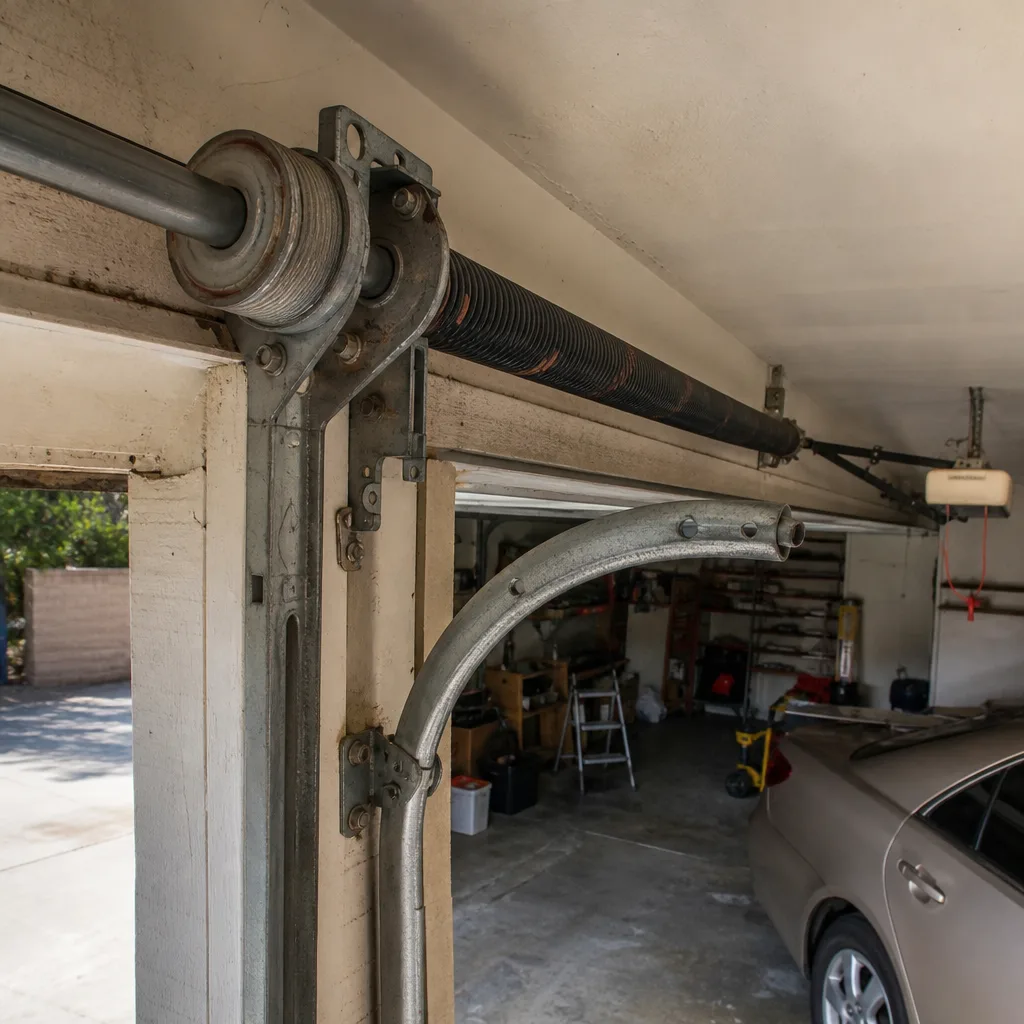 Before
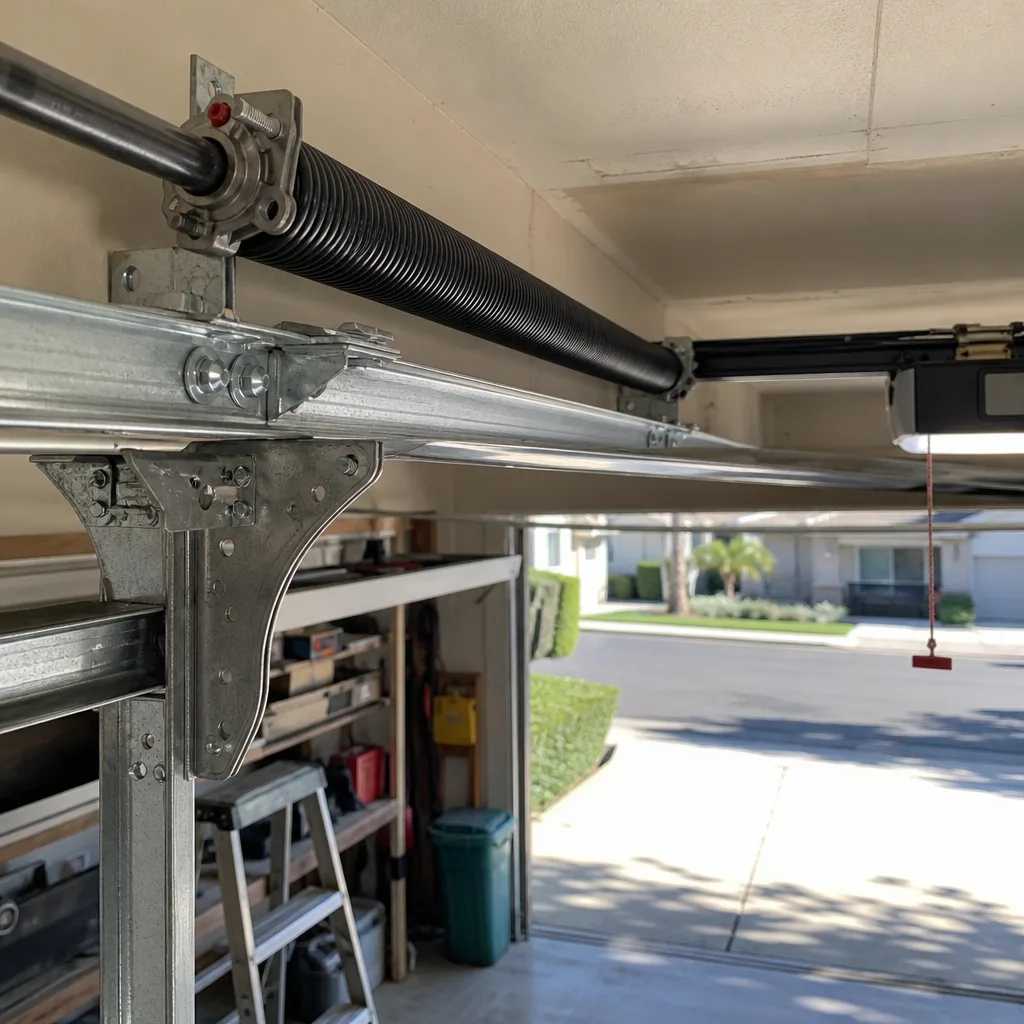 After
After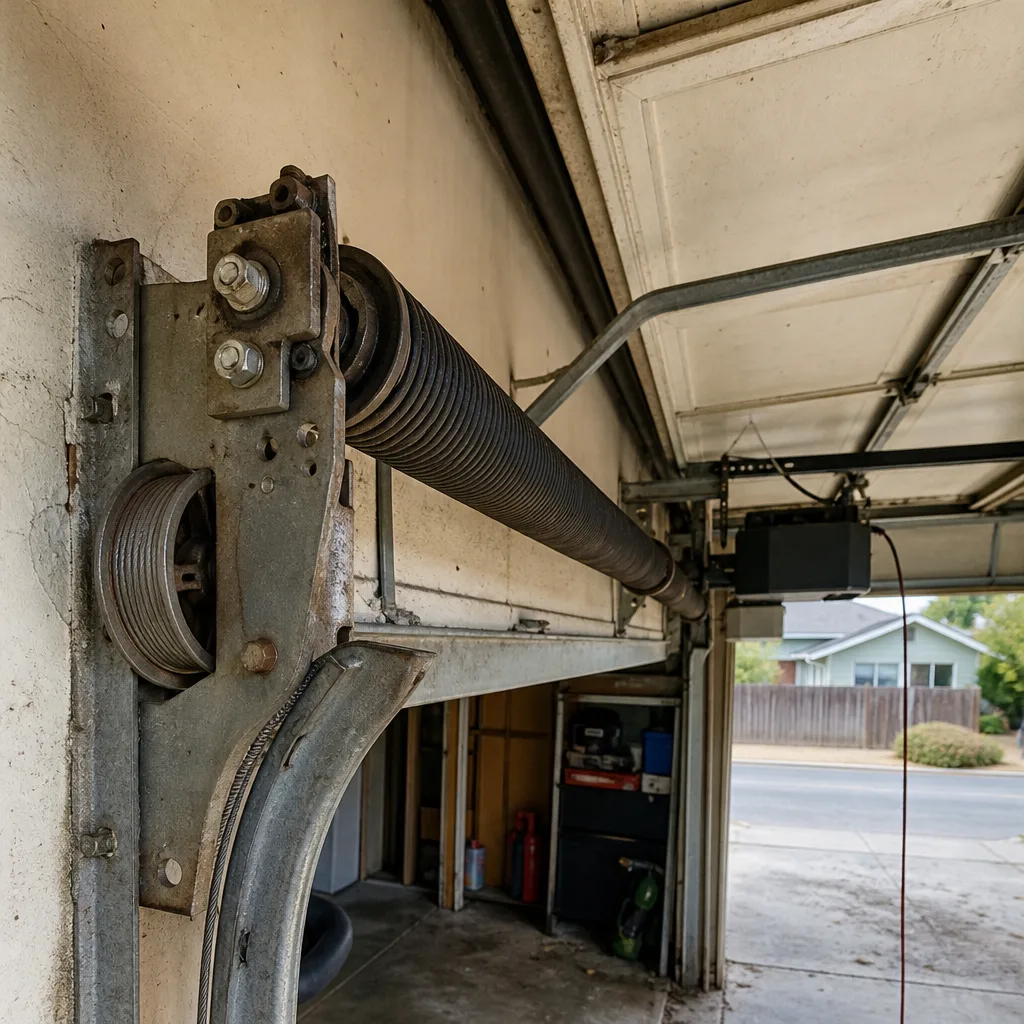 Before
 After
After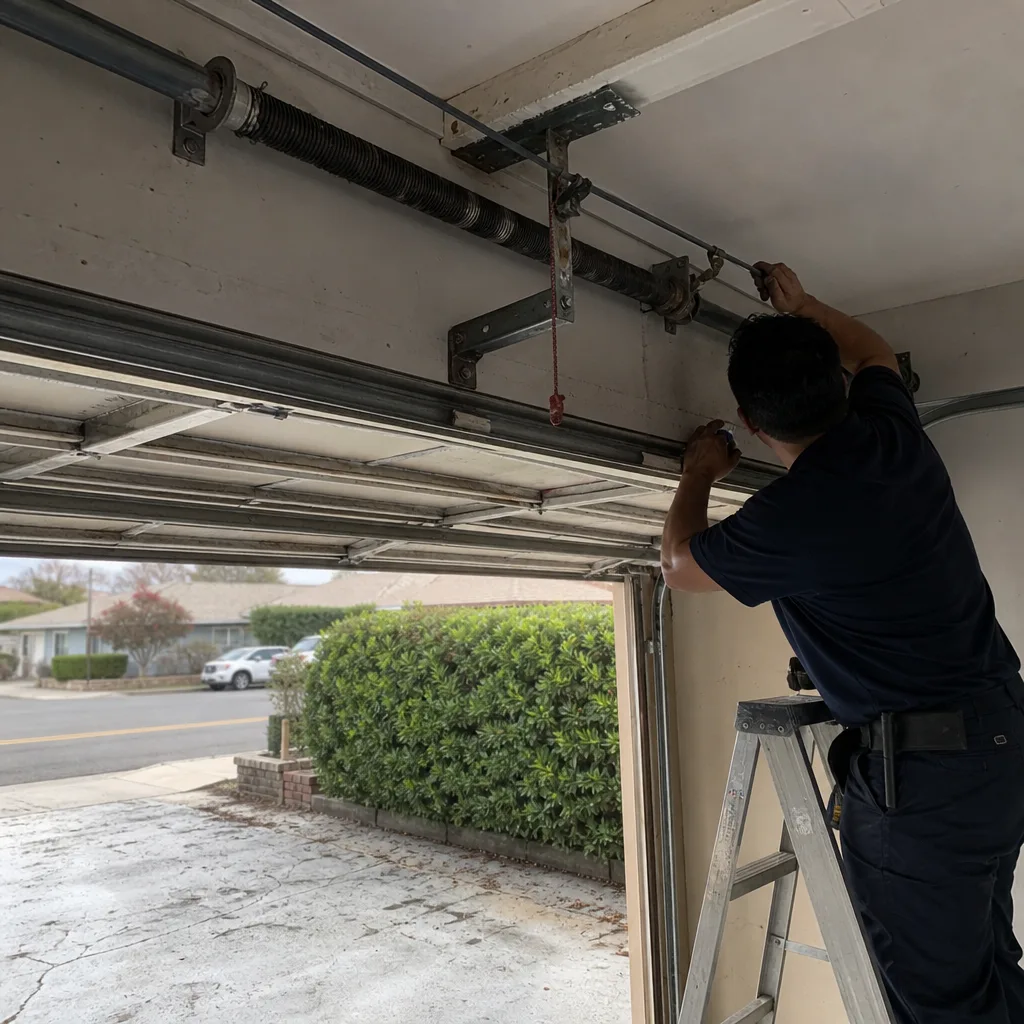 Before
 After
After