
Last updated October 16, 2026
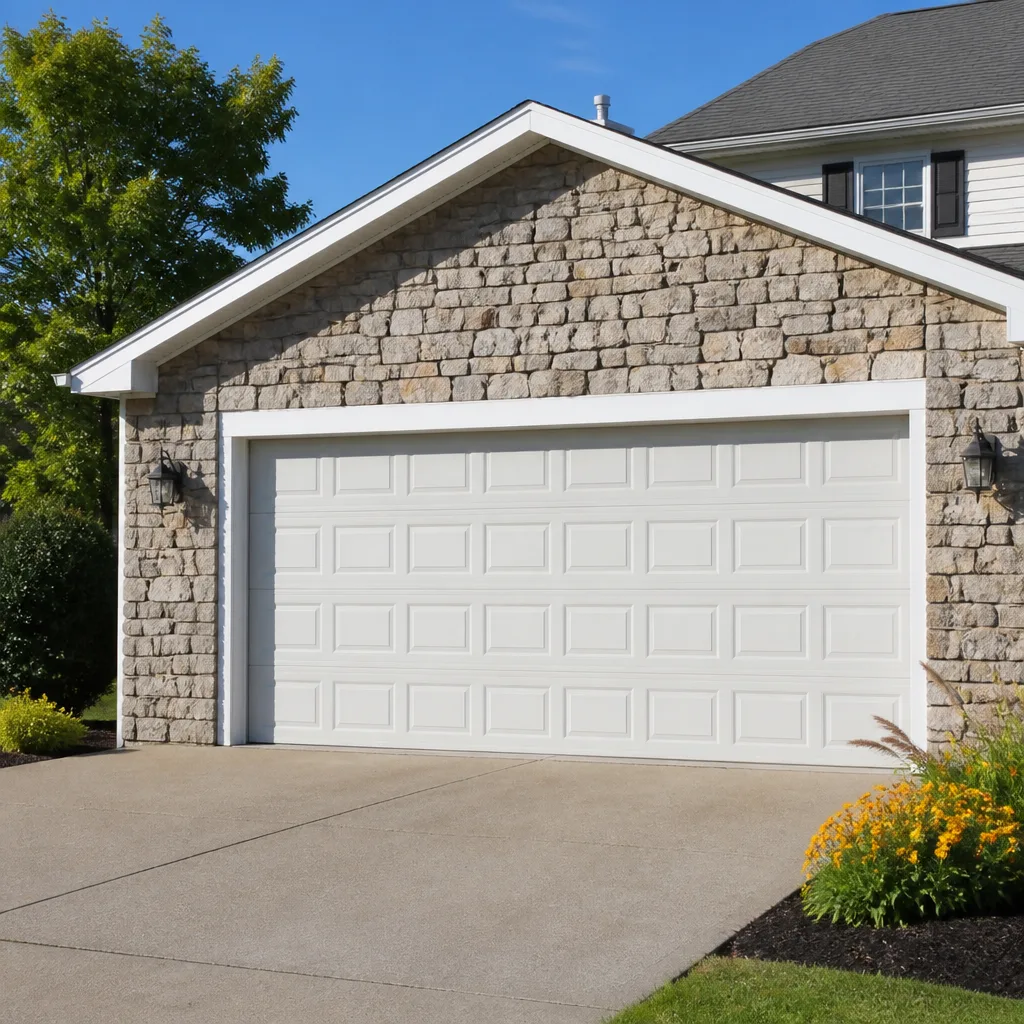 Raised-panel steel
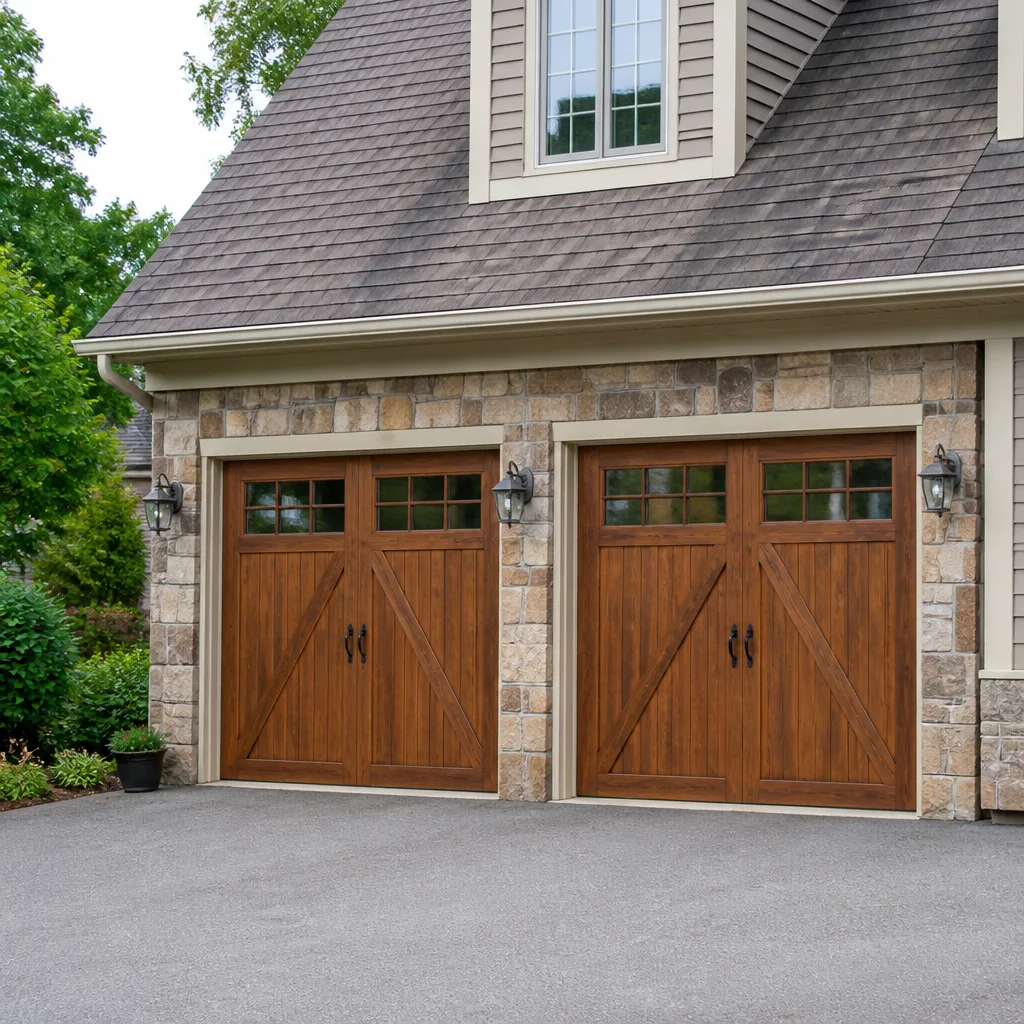 Carriage house
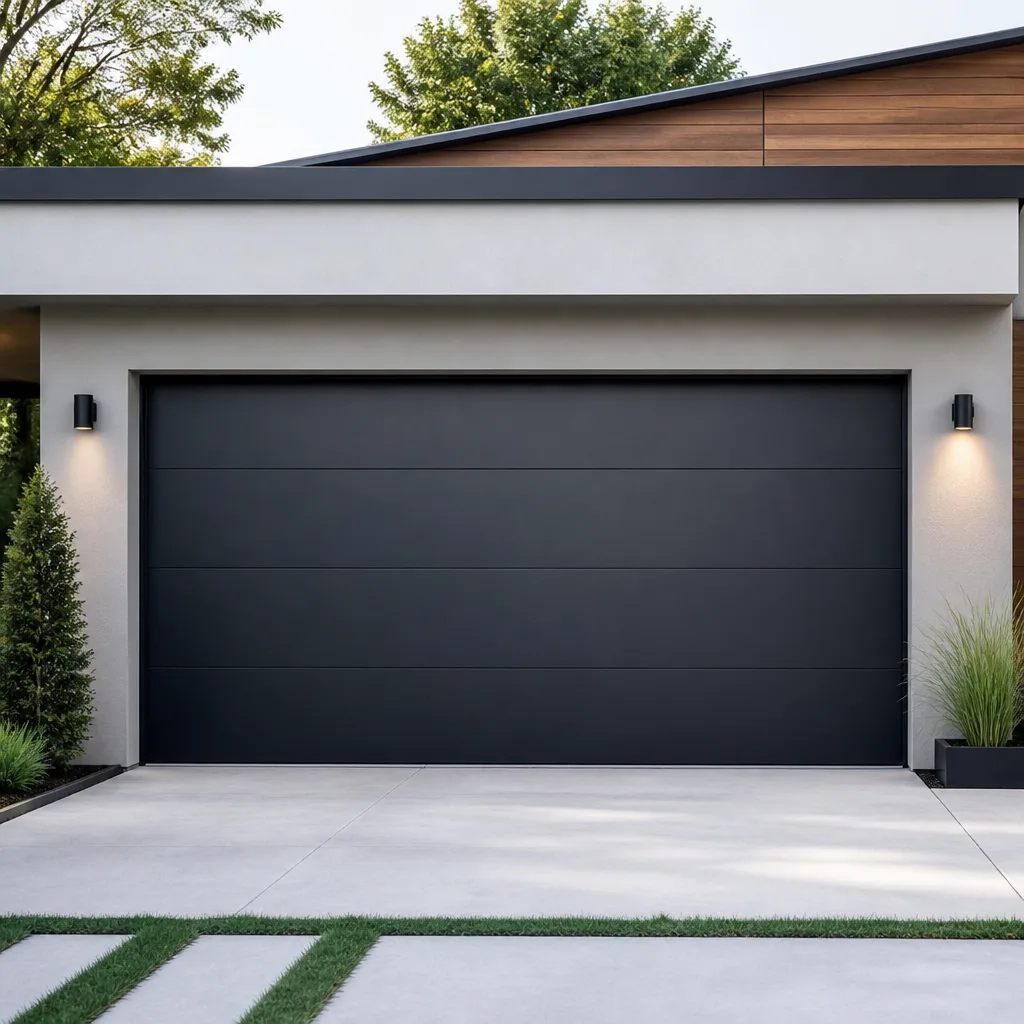 Modern flush
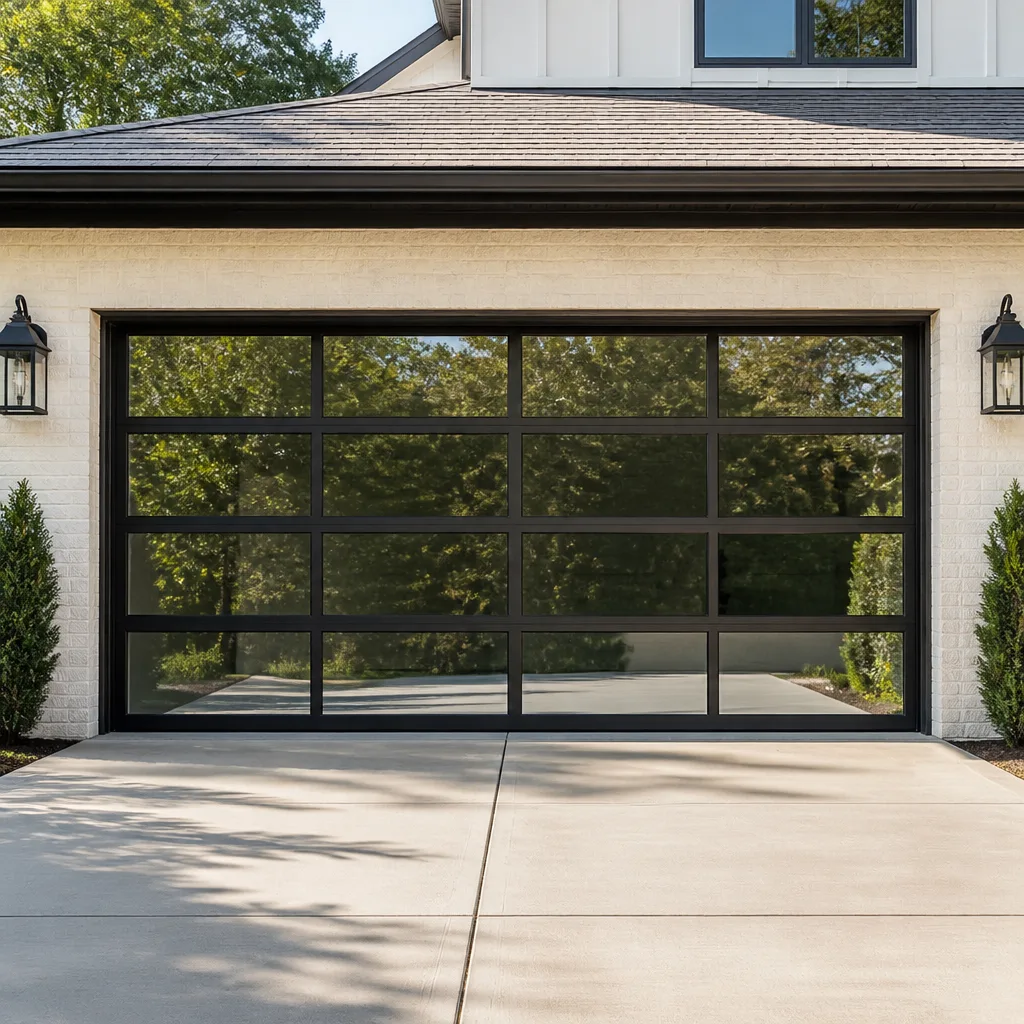 Full-view glass
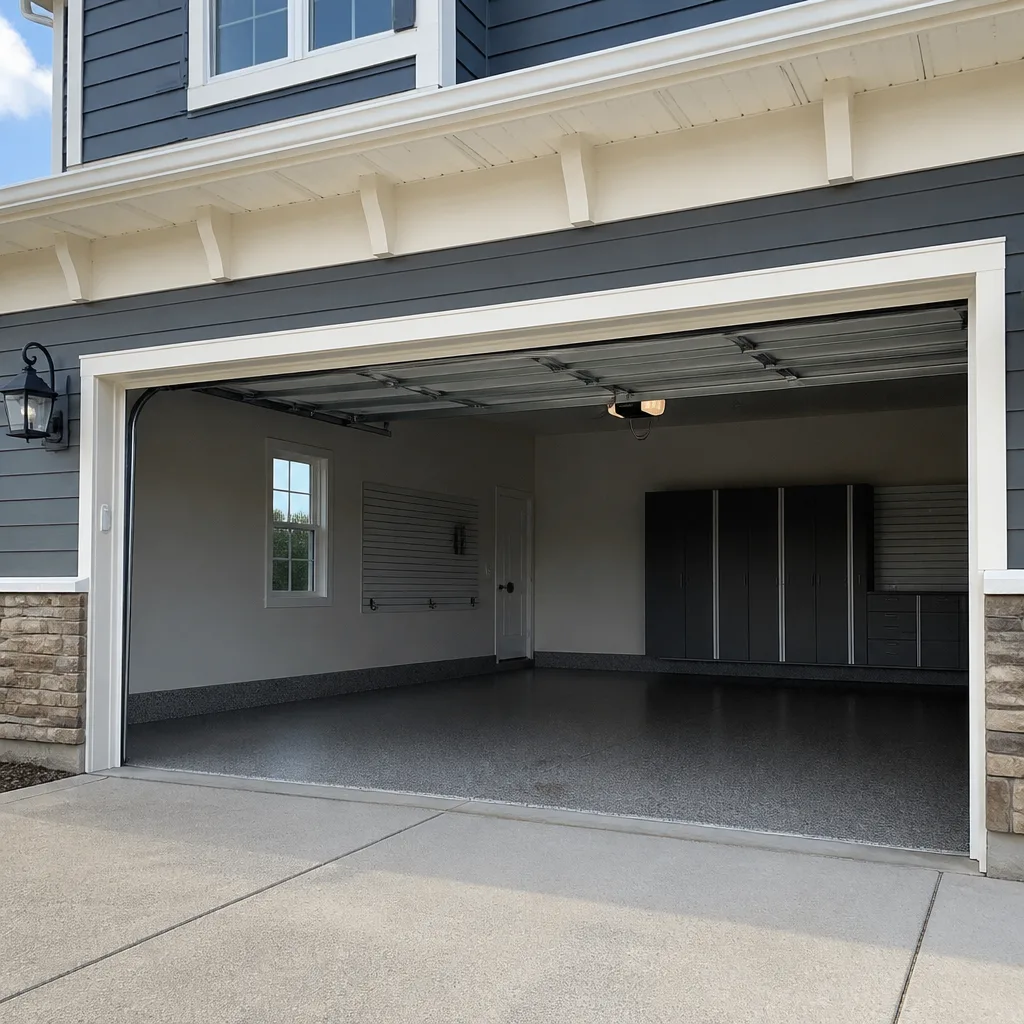 LiftMaster openers
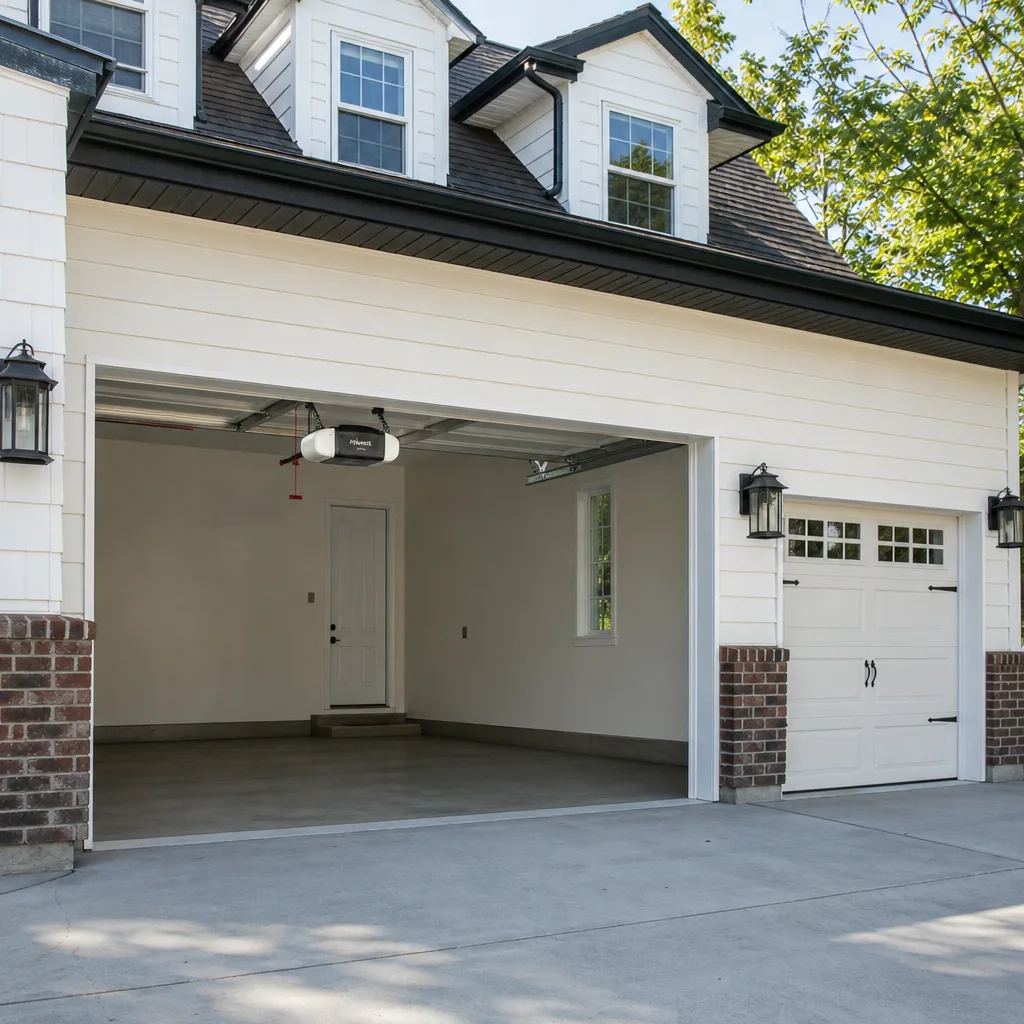 Chamberlain openers
Full 25-point door and opener safety check with every visit - springs, cables, rollers, tracks, and your LiftMaster or Chamberlain opener included
You get a price before we start. It does not change when the truck arrives.
Get your free estimateDIY vs Professional Garage Door: The Ventura Homeowner’s Decision Guide
A torsion spring on a standard double-wide garage door holds between 150 and 200 pounds of stored torque. That’s roughly the force of a professional baseball pitcher’s fastball, compressed into a steel coil mounted directly above the spot where you’d be standing to work on it. In Ventura, where the coastal salt air accelerates spring corrosion and thousands of 1990s-era tract homes are reaching the end of their original door hardware’s service life, this isn’t a hypothetical concern. This guide draws a hard line between the handful of garage door tasks a competent homeowner can genuinely handle and the ones where professional service is not a preference but a safety requirement. For more guides & resources on keeping your Ventura garage door safe, see our blog.
Quick Answer
Homeowners can safely handle lubrication, weatherstripping replacement, safety-sensor realignment, remote battery swaps, and basic limit-switch adjustments. They should never attempt torsion spring replacement, cable re-winding, or opener gear replacement regardless of skill level or YouTube preparation. The economics complicate the DIY appeal: most professional repairs in Ventura cost between $95 and $340, while a single emergency room copay for a hand injury starts around $250. Before you touch a winding bar, call Garage Door Repair in Ventura for a written quote.
Styles & brands we work with
Table of Contents
- The Physics Problem: Why Garage Doors Aren’t Normal DIY Projects
- The Safe List: 6 Tasks a Homeowner Can Genuinely Do Alone
- The No-Go List: 5 Jobs That Require a Technician No Matter What
- The Real Cost Comparison: Parts vs. Risk-Adjusted Total
- Ventura-Specific Risks: Salt Air, Tract Homes, and the Torquemaster Problem
- The Partial DIY Model: Where Cooperation Beats Isolation
- What a Professional Visit Produces That DIY Never Can
- Brand-Specific Realities: Why Your LiftMaster Isn’t Your Neighbor’s Raynor
The Physics Problem: Why Garage Doors Aren’t Normal DIY Projects
Most home improvement tasks fail safely. If you botch a drywall patch, the worst outcome is an ugly wall. If you install a light fixture wrong, the breaker trips and you try again. Garage doors break that pattern. The two torsion springs above your door hold the full weight of a 150-to-250-pound panel system under constant tension. When a winding bar slips during a spring replacement, that energy releases in a fraction of a second. The injuries from a single mishap include broken wrists, fractured facial bones, severed fingers, and occasionally worse. We’re not being dramatic. The Consumer Product Safety Commission has tracked garage door-related injuries for decades, and spring-related accidents remain the most severe category.
Our owner, Aaron Teague, has seen the aftermath up close. In nearly 25 years serving Ventura, he’s repaired doors where homeowners attempted a spring swap with improvised tools, only to have the winding cone strip mid-turn. The spring doesn’t always fly off. Sometimes it binds, then releases unpredictably minutes later while the homeowner inspects their work. The risk isn’t contained to the moment of winding. It lingers until the spring is properly seated and the set screws are torqued to specification. That’s the part DIY guides rarely mention.
The Safe List: 6 Tasks a Homeowner Can Genuinely Do Alone
There’s a real middle ground between calling a technician for everything and attempting a dangerous repair with Harbor Freight tools. These six tasks are genuinely safe for a competent homeowner, require no special tools beyond basic household items, and carry essentially zero risk of injury or system damage when done as described.
- Lubricate hinges and rollers. Use a spray lithium grease or a dedicated garage door lubricant, not WD-40. Apply to the hinge pins, roller stems, and the torsion spring coils. Do this every six months in Ventura’s salt air. You’ll hear the difference immediately.
- Replace bottom weatherstripping. The rubber seal along the bottom of the door dries out and cracks within three to five years near the coast. New stripping slides into the aluminum retainer channel. This is a $15 fix that keeps rainwater and field mice out of your garage.
- Realign safety sensors. The photo eye sensors near the floor on either side of the door can get bumped out of alignment. When both lights are solid, alignment is good. If one blinks, loosen the wing nut, adjust the angle until both lights go solid, and retighten.
- Replace a remote battery. This is a two-minute job with a coin cell battery that costs less than $5. If your Chamberlain or LiftMaster remote works inconsistently, try the battery before calling anyone.
- Reset the limit switch. On most openers, the limit switch controls how far the door travels before stopping. If the door doesn’t close flush or opens too far, small Phillips-head adjustments on the opener’s side panel usually fix it. Your opener manual has the exact procedure.
- Tighten loose hardware. Bolts and brackets loosen over time from vibration. A socket set and ten minutes of checking the track brackets, hinge bolts, and opener mounting points prevents a lot of bigger failures.
None of these tasks involve releasing or adding tension to the spring system. That’s the boundary. Stay on the right side of it.
The No-Go List: 5 Jobs That Require a Technician No Matter What
These are the tasks we get called to fix after someone watches a 12-minute YouTube tutorial and decides to give it a shot. Every one of them involves stored kinetic energy, precision calibration, or both. No amount of preparation changes the risk calculus.
- Torsion spring replacement. The spring above the door. It holds 150 to 200 pounds of torque. It requires two specially sized winding bars, exact knowledge of the correct number of quarter-turns for your door’s height and weight, and a steady hand during the entire winding process. If you do it wrong and the spring slips, the result is a snapped bar, a flying cone, or worse.
- Cable re-winding or replacement. The lift cables run under tension alongside the tracks. If one breaks, the door’s weight shifts violently to the remaining cable and the frame. Replacing a cable means releasing the spring tension first. That’s a technician’s job.
- Opener gear replacement. The plastic drive gear inside your opener motor head is by design the sacrificial component. When it strips, replacing it requires opening the motor housing, working with the drive train, and correctly re-engaging the travel limits. We’ve seen DIY gear jobs that ran the door through the back of the garage wall because the new limit settings were never calibrated.
- Track replacement or re-hanging. If a track is bent from a vehicle strike or a failed roller, the door will not travel safely until the track is replaced and the entire door is re-balanced. This is a geometry problem as much as a hardware problem.
- Any repair to a Wayne-Dalton Torquemaster system. More on this below, but the short version is this: the spring on these systems lives inside a sealed tube. You cannot visually inspect it during winding. If you don’t know exactly what you’re looking at, you don’t know if you’ve accidentally left partial tension on one side.
Our Garage Door Opener Repair in Ventura service handles all of these. The technicians arrive with the correct parts, the correct tools, and a written price before anything gets touched.
The Real Cost Comparison: Parts vs. Risk-Adjusted Total
Here’s where the DIY math breaks down. A torsion spring pair for a standard 16×7 door runs $80 to $120 online. The official-sounding winding bars cost $15 to $30. If everything goes perfectly, the DIY repair costs about $100 to $150. The professional repair in Ventura for the same job typically lands between $180 and $340, including the springs. The difference is $80 to $190 in professional labor.
Now factor in what the DIY path actually risks. A single urgent care visit for a hand injury costs $150 to $300 with insurance. An emergency room visit runs $1,000 to $3,000 without. That’s before any lost wages, follow-up physical therapy, or the possibility of a permanent disability to your dominant hand. And that’s just the medical side. A spring installed incorrectly can fail in weeks, dropping a 200-pound door onto a car, a child’s bicycle, or a person. The probability of a mishap on a first-time spring replacement is not trivial. The consequences of the likely failure modes are catastrophic. That’s what “risk-adjusted cost” means.
Our position is straightforward, because we’ve seen the other side of this decision too many times. If the DIY savings were $1,000, there might be an argument. At $80 to $190, you’re not paying for labor. You’re paying for insurance against an injury that changes your life.
| Task | Typical Parts Cost (DIY) | Typical Professional Cost (Ventura) | Risk-Adjusted Verdict |
|---|---|---|---|
| Torsion spring replacement | $80 – $150 | $180 – $340 | Always professional |
| Cable replacement | $25 – $50 | $95 – $185 | Always professional |
| Opener installation | $220 – $350 (opener only) | $450 – $700 (installed, programmed) | Professional for most |
| Weatherstripping replacement | $15 – $30 | $75 – $125 | Safe DIY |
| Sensor realignment | $0 | $85 – $120 (service call) | Safe DIY |
| Full lubrication service | $10 – $20 in materials | $85 – $140 | Safe DIY |
For a complete picture on what professional work costs, see Garage Door Installation in Ventura where we publish real price ranges, not vague “call for quote” placeholders.
Ventura-Specific Risks: Salt Air, Tract Homes, and the Torquemaster Problem
Ventura has a garage door problem that inland cities simply don’t face, and it makes professional inspections more valuable here than almost anywhere else in California. The marine layer brings salt-laden moisture off the Pacific on a near-nightly basis. That salt settles on uncoated steel parts, accelerates spring corrosion, and eats through lift cables years before their rated lifespan. A spring that would last 12,000 cycles in Bakersfield might fail at 8,000 in Ventura’s east end, where the ocean air is most persistent.
Worse, many Ventura homes built in the 1990s and early 2000s came equipped with Wayne-Dalton doors and Torquemaster spring systems. The Torquemaster design differs from a standard torsion spring in one critical way: the spring lives inside a sealed metal tube mounted above the door. Before attempting any work, homeowners should understand Garage Door Permits, Codes & Inspections in CA: What You Need to Know. You cannot see the spring, cannot inspect its condition, and cannot count the coils during winding. The torque is applied through a gear mechanism at the end of the tube. If a homeowner attempts to wind this system without knowing the exact procedure, they can apply uneven tension that’s invisible until the door comes off the track under load. It’s not just difficult. It’s genuinely dangerous in a way that standard exposed springs are not.
In our experience at Doyle Garage Doors, we replace entire Torquemaster systems with standard torsion spring conversions more often than we repair the original design. The conversion is safer, easier to service, and uses springs rated for 25,000 cycles or more. It’s the kind of upgrade a homeowner doesn’t know to ask for, but should.
The Partial DIY Model: Where Cooperation Beats Isolation
The DIY-versus-professional framing is a false binary. The smartest Ventura homeowners we work with land somewhere in the middle. They handle the low-risk tasks on their own schedule and use a professional for anything involving tensioned hardware. For a complete list of what to check, download our Garage Door Repair Maintenance Checklist for Ventura Homeowners. But there’s also a cooperative middle path that maximizes your involvement without moving any risk to you.
When we install a new garage door in Ventura, the homeowner’s participation often looks like this:
- Be present for the diagnosis. You know your door’s quirks better than anyone. When the technician arrives, walk them through what you’ve observed. The creak that happens only when it’s cold. The way the door pauses halfway up on humid mornings. These details speed up diagnosis and ensure nothing gets missed.
- Source your own opener unit if you know the specs. If you know you want a specific LiftMaster model and you’ve confirmed it’s compatible with your door’s height and weight, buying it yourself and having your technician install it can save $50 to $100. We’re happy to install customer-supplied openers, provided they’re new in box and the correct model.
- Handle the cosmetic work. If your door panels are sound but faded, painting them is a safe DIY project. So is replacing weatherstripping. Doing these jobs before the technician arrives means the professional visit can focus entirely on mechanical and safety-critical work.
- Ask questions during the service. A good technician will explain what they’re doing and why. You leave the visit smarter than you arrived, which means your own monthly maintenance keeps the system running longer between service calls.
This model isn’t about saving money, though it sometimes does. It’s about understanding your own home and making informed decisions. That’s the whole point.
What a Professional Visit Produces That DIY Never Can
There are three things a professional garage door service delivers that no amount of DIY effort can replicate. They’re not about skill or effort. They’re structural.
A written safety inspection finding. When a Doyle Garage Doors technician finishes a repair, they document what they found: the condition of every spring, cable, roller, hinge, track bracket, and the opener’s electrical connection. You get a written record of your door’s actual condition, not a mental note. If something fails 90 days later, there’s a record of what was checked and what was flagged. That’s a legal and practical asset.
Documented component grades. Not all springs are equal. We install springs rated for a specific cycle count, chosen based on your door’s weight and your household’s usage patterns. The written receipt tells you exactly what was installed and what cycle rating it carries. A DIY spring from Amazon has no documented rating, no traceability, and no one to call when it fails.
A guarantee that covers parts and labor. Our 365-Day Done Right Promise is stated on every receipt: 365 days from the date of repair, if it fails, we come back and make it right at no charge. No fine print. No prorated labor. No argument. If a DIY spring breaks after 60 days, you’re buying another one and doing the whole job over again. If our spring breaks inside a year, we replace it and re-install it for free. That’s the difference between a parts warranty and a service guarantee.
Every technician works under the Threshold Standard: background checked, identity verified, uniformed, and photographed. Your written confirmation shows the technician’s name and photo before they arrive. When you open your front door, you know exactly who’s standing there. That’s not a nice-to-have. For many Ventura homeowners, especially those home alone or managing young kids, it’s the deciding factor.
Brand-Specific Realities: Why Your LiftMaster Isn’t Your Neighbor’s Raynor
Garage door brands genuinely differ in ways that matter for repair and replacement decisions. We service all major brands, and certain patterns emerge over thousands of service calls.
LiftMaster and Chamberlain share a parent company and many internal components. Openers from these brands dominate Ventura garages, and their repair path is well established. The most common failure we see is the plastic drive gear, which strips after ten to fifteen years of use. It’s a straightforward replacement for a technician and a potentially dangerous one for a DIYer working inside the motor head.
Craftsman openers, especially the workhorse models from the 1990s and early 2000s, have earned a reputation for longevity. Many are still running original parts. The trade-off: those original parts are increasingly scarce, and when a limit switch or logic board fails, repair often costs more than the unit is worth. We advise Craftsman owners to consider replacement when the repair estimate crosses the halfway mark of a new opener’s cost.
Raynor doors occupy the premium end of the market, with thicker steel and heavier-duty hardware. They’re overbuilt, which is good, but that extra weight means their torsion springs carry more load than standard doors. Correct spring sizing is even more critical on a Raynor than on an economy brand. A guessed spring size on a Raynor door is a door that won’t balance, and an unbalanced door wears out openers and cables quickly.
The lesson isn’t that one brand is better. It’s that the right repair depends on knowing exactly what’s installed. That’s why we start every job with a visual inspection and model confirmation, not an assumption based on what most homes have.
Common Mistakes to Avoid
- Using WD-40 on a garage door. WD-40 is a degreaser with light lubricating properties. It actually strips the heavy grease from hinge pins and roller stems, leaving the door noisier than before. Use lithium grease or a dedicated garage door lubricant.
- Believing the “one spring fits all” internet advice. Spring sizing depends on door height, width, weight, cable drum size, and track radius. A spring sized for a neighbor’s 7-foot door will not safely operate your 8-foot door. This is a measured calculation, not a guess.
- Ignoring a door that’s slightly off-balance. If your door creeps up when you release it manually, or slams down hard, the spring tension is wrong. The door is working against itself, which shortens opener life and eventually causes a more expensive failure. Fix the balance issue now, not later.
- Replacing the opener when the door is the problem. A door with worn rollers, rusted hinges, or incorrect spring tension will burn out a perfectly good opener in a year or two. Diagnose the door first, then the opener. Many Ventura homeowners waste $400 on a new opener when the real issue was a $15 roller set and a spring adjustment.
- Removing a spring without securing the door first. If you insist on learning how spring systems work, start by buying and reading a professional repair manual. Do not start by removing bolts. The moment a lift cable goes slack, the door becomes an uncontrolled mass.
- Attempting a Torquemaster repair with standard torsion instructions. A Wayne-Dalton Torquemaster is a completely different animal from a standard torsion system. Applying standard-torsion instructions to a Torquemaster is how windows get broken and hands get crushed.
See the difference
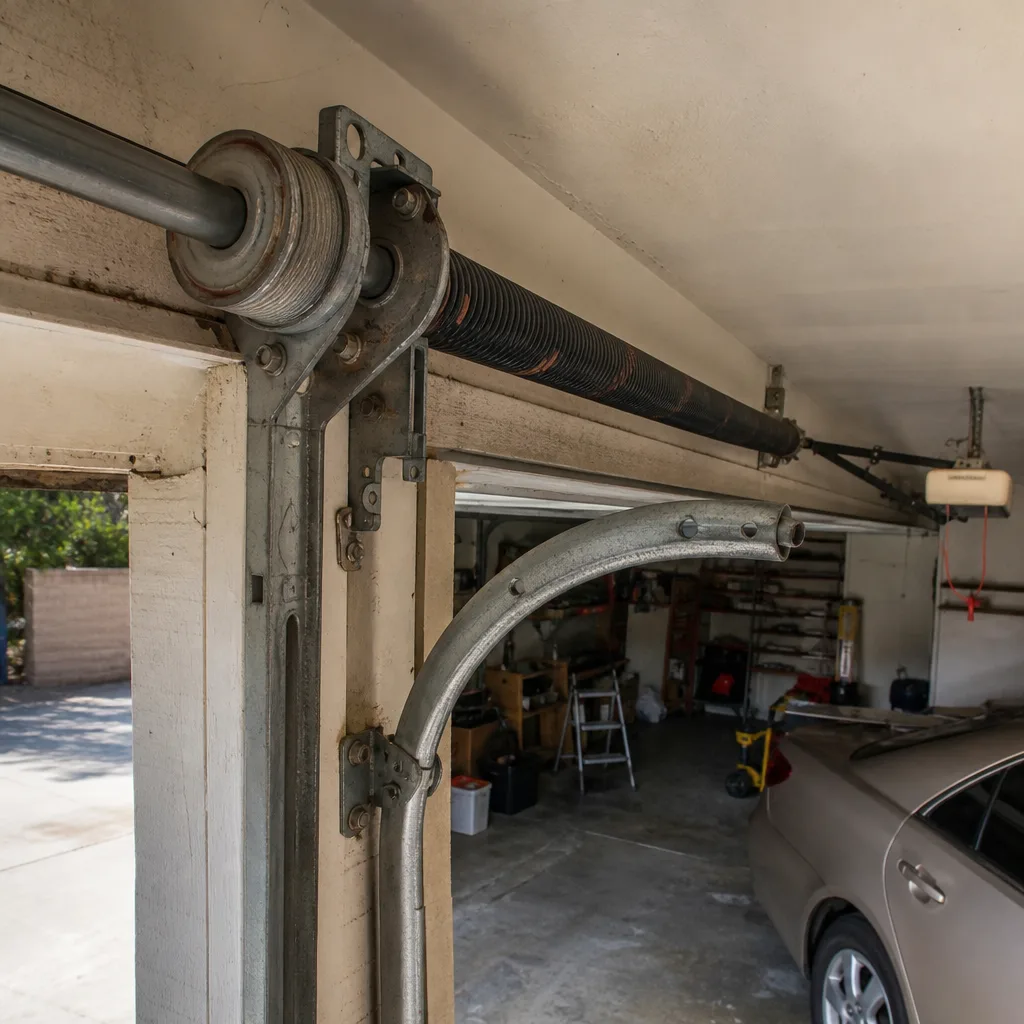 Before
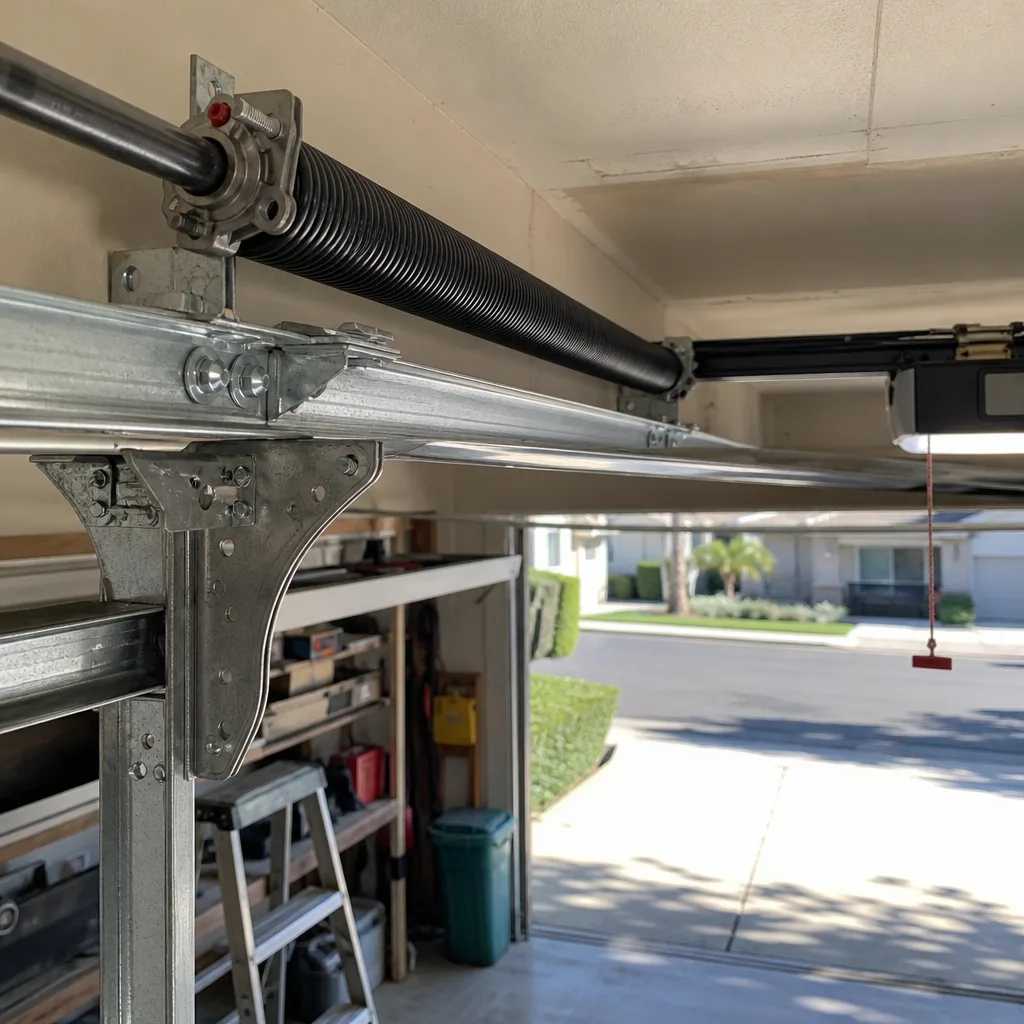 After
After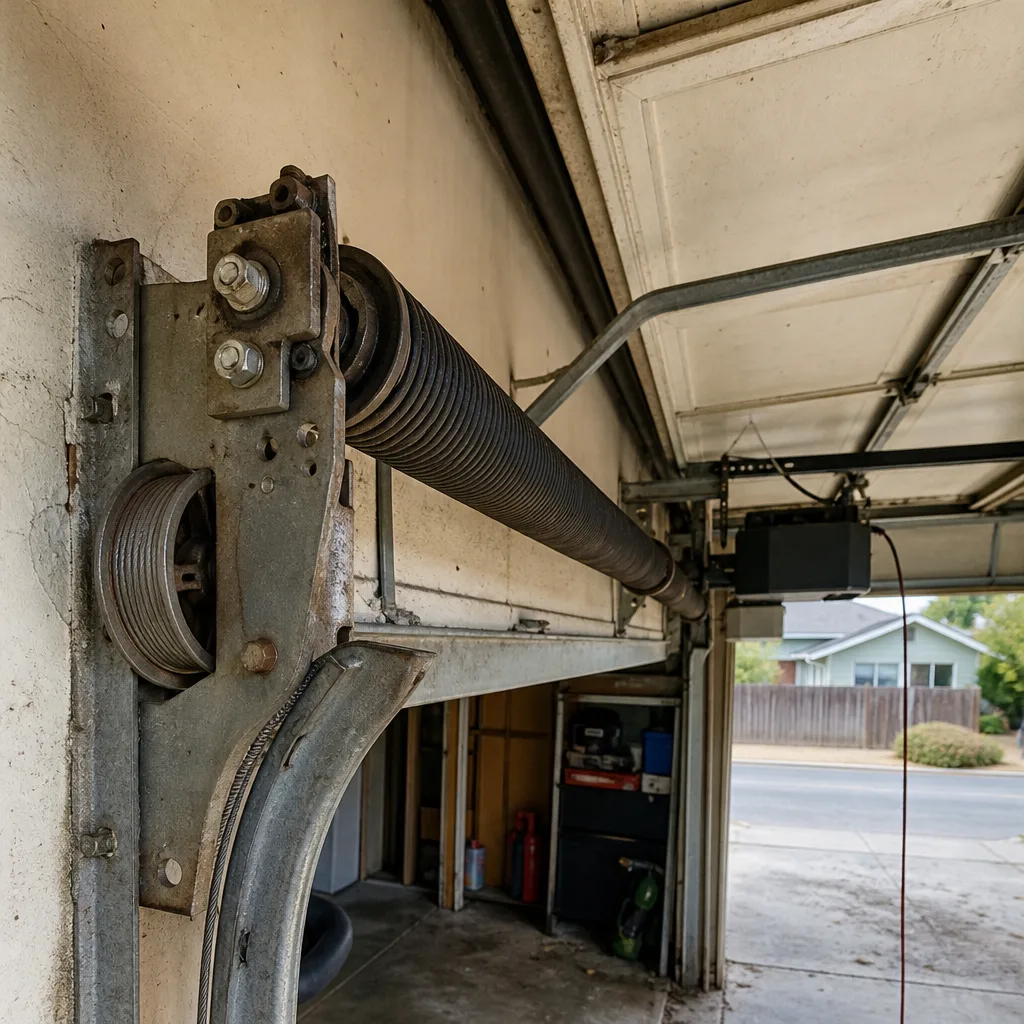 Before
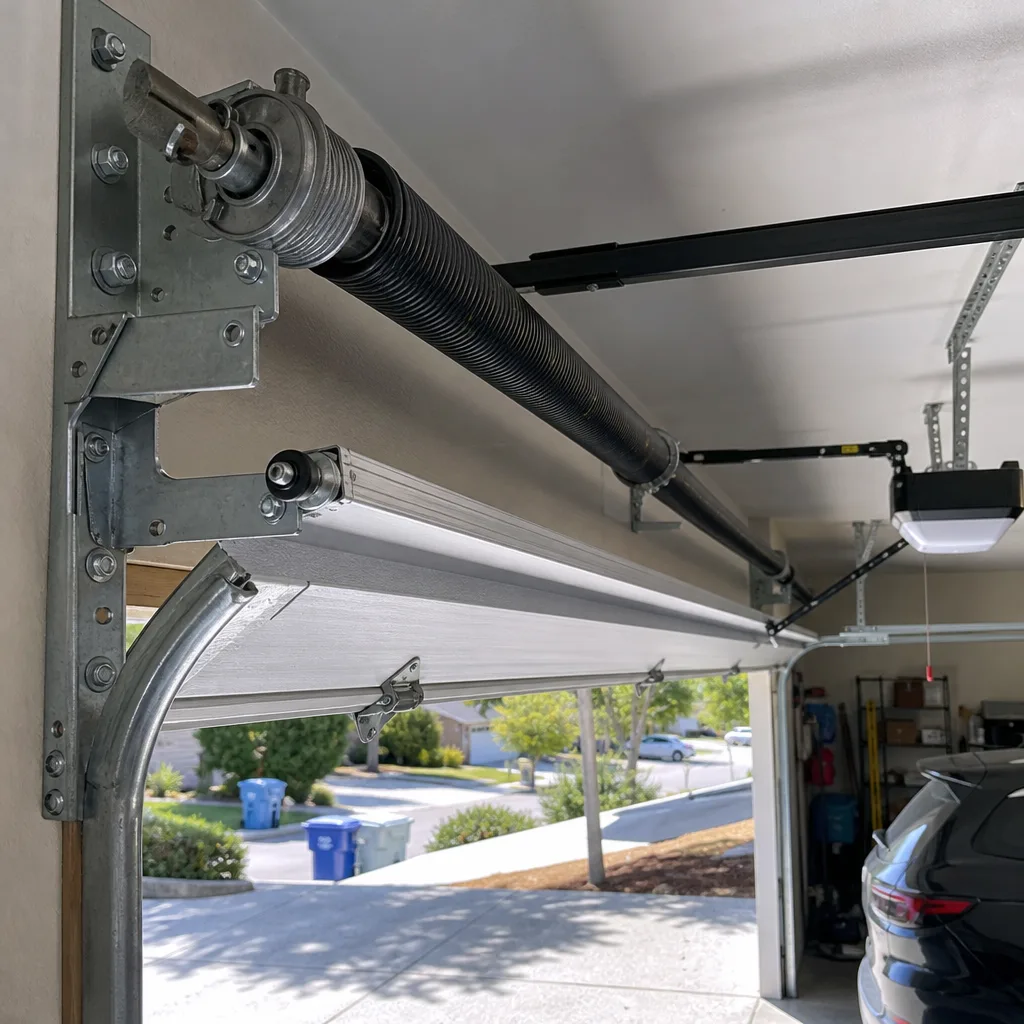 After
After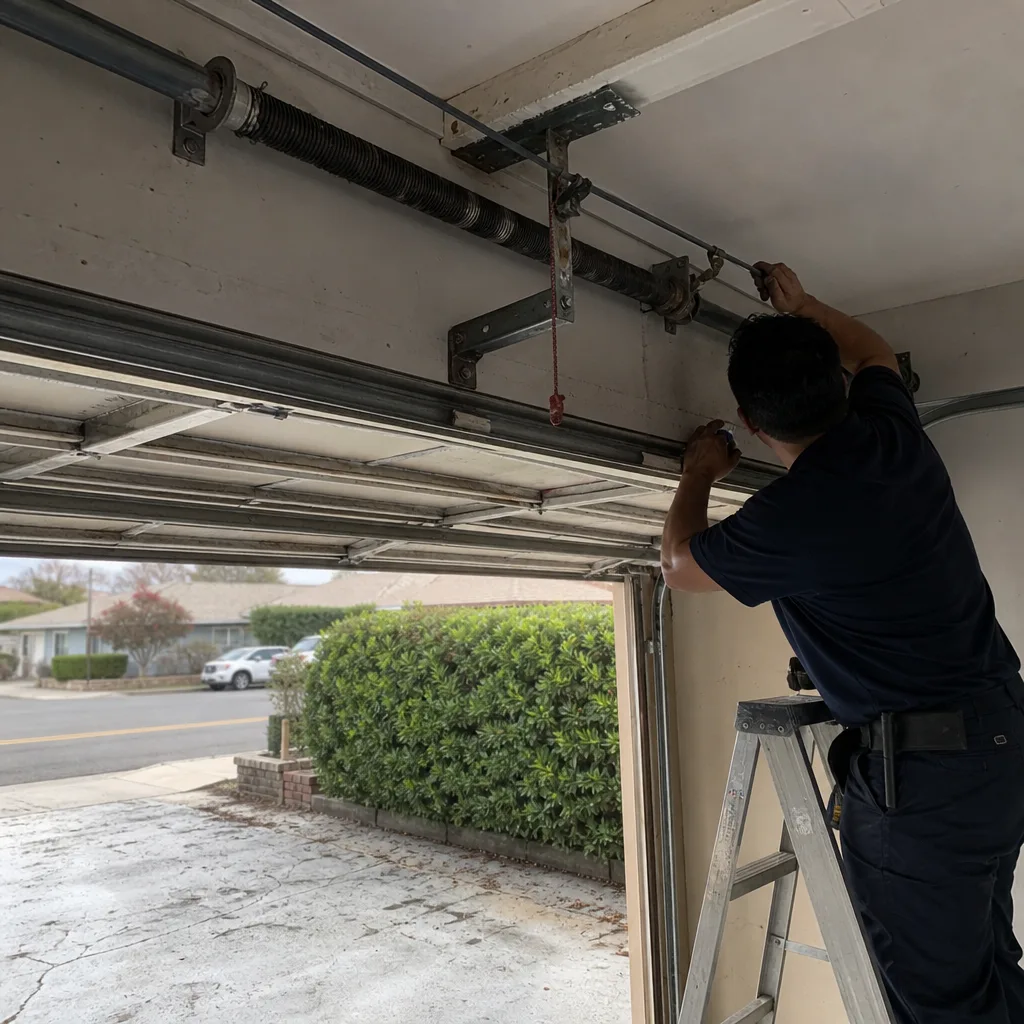 Before
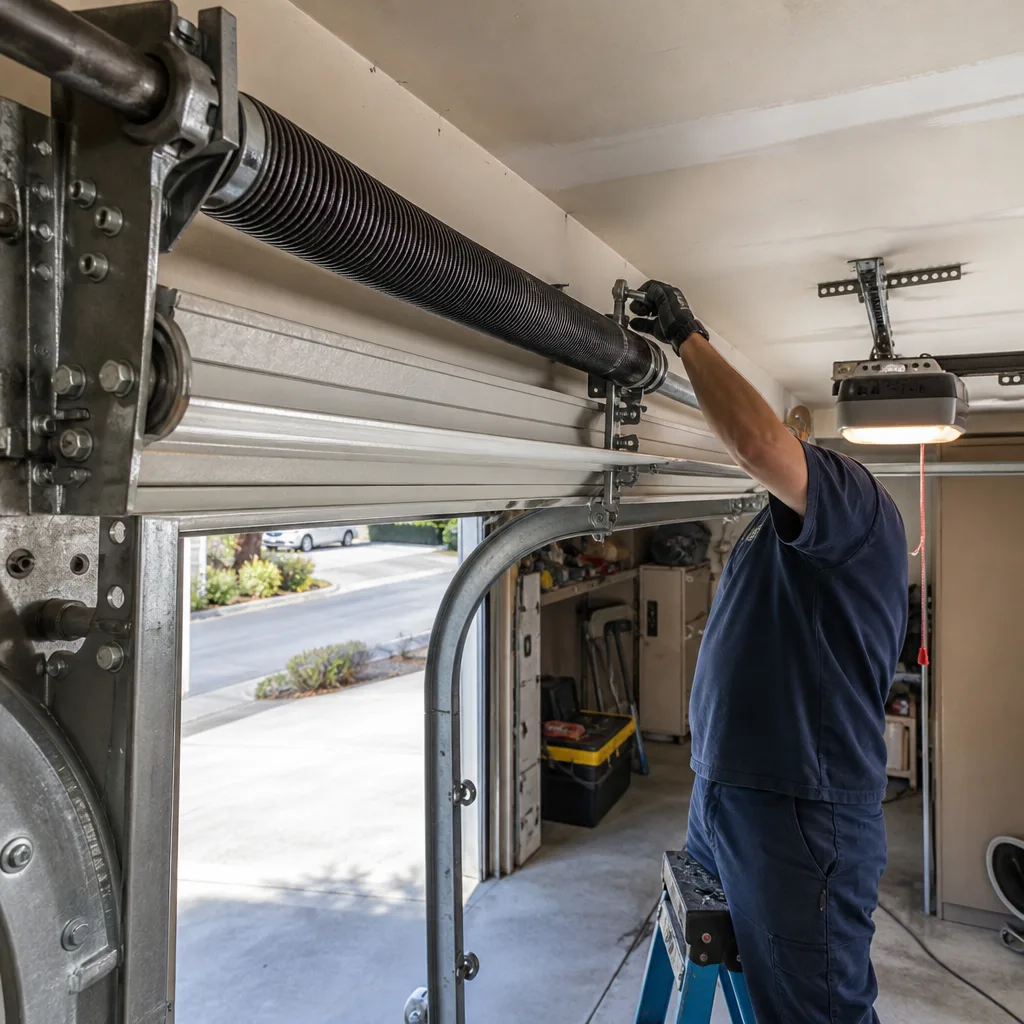 After
AfterWhen to Call a Professional
Call a professional if you hear a sharp crack from the garage and the door won’t open. A broken spring announces itself, and the door will typically refuse to move or will drop hard if released. Also call if you see frayed lift cables, a door that’s visibly crooked in the tracks, an opener that runs without moving the door, or a door that reverses unexpectedly. These are all signs of component failure or tension imbalance. They’re not adjustable with a screwdriver. Doyle Garage Doors Ventura home service area covers all of Ventura, and we offer free estimates. Call (559) 239-8293 for a written price before any work begins.
Frequently Asked Questions
Torsion spring replacement in Ventura typically costs between $180 and $340, including the springs and labor. The exact price depends on your door’s weight, the spring cycle rating selected, and whether it’s a standard torsion or a Torquemaster system that needs conversion. Call (559) 239-8293 for an exact written quote before any work starts.
You can save $80 to $190 in labor on paper, but the risk-adjusted cost is almost always negative. A single urgent care visit for a hand injury costs about as much as the professional labor, and an ER visit costs ten times that. The financial case for DIY spring work collapses as soon as you factor in the realistic probability and severity of a mishap.
The torsion spring is the most dangerous single component. It stores 150 to 200 pounds of torque under load, and that energy releases violently if a winding bar slips or a set screw fails. The Wayne-Dalton Torquemaster design, common in 1990s Ventura tract homes, is particularly hazardous because the spring is hidden inside a sealed tube and cannot be visually inspected during winding.
Lubricating hinges and rollers, replacing bottom weatherstripping, realigning safety sensors, replacing remote batteries, and adjusting the limit switch are all safe for a competent homeowner using basic tools. None of these tasks involve releasing or adding tension to the spring system. That’s the boundary that matters.
Ventura’s ocean air causes accelerated corrosion on steel hardware, especially springs and cables. A spring rated for 12,000 cycles can fail at 8,000 or fewer near the coast. Salt also degrades the powder coating on steel doors,leading to rust spots on lower panels. Coastal Ventura homeowners should lubricate metal parts every six months and plan for shorter hardware service life than inland residents.
No. Doyle Garage Doors Ventura puts every price in writing before any work starts. The price you’re quoted is the price you pay, and if additional issues are found during the repair, that requires separate approval in writing before anything else gets touched. Call (559) 239-8293 and we’ll tell you the price over the phone based on what you describe.
The Bottom Line
The DIY-versus-professional question for garage doors isn’t really about skill. It’s about physics, and physics doesn’t care how many YouTube videos you’ve watched. A torsion spring holds 150 to 200 pounds of stored torque, and a winding bar slip can change your life in a fraction of a second. The tasks that are safe to DIY are genuinely safe, and we’ve listed them above. The tasks that aren’t safe are genuinely dangerous, with no middle ground. Ventura’s coastal climate and aging tract-home stock make the professional inspection and guarantee even more valuable here than elsewhere. The math is clear: at $80 to $190 in savings, you’re not paying for labor. You’re paying for insurance.
Written by Aaron Teague, Owner at Doyle Garage Doors Ventura, serving Ventura since 2001.